
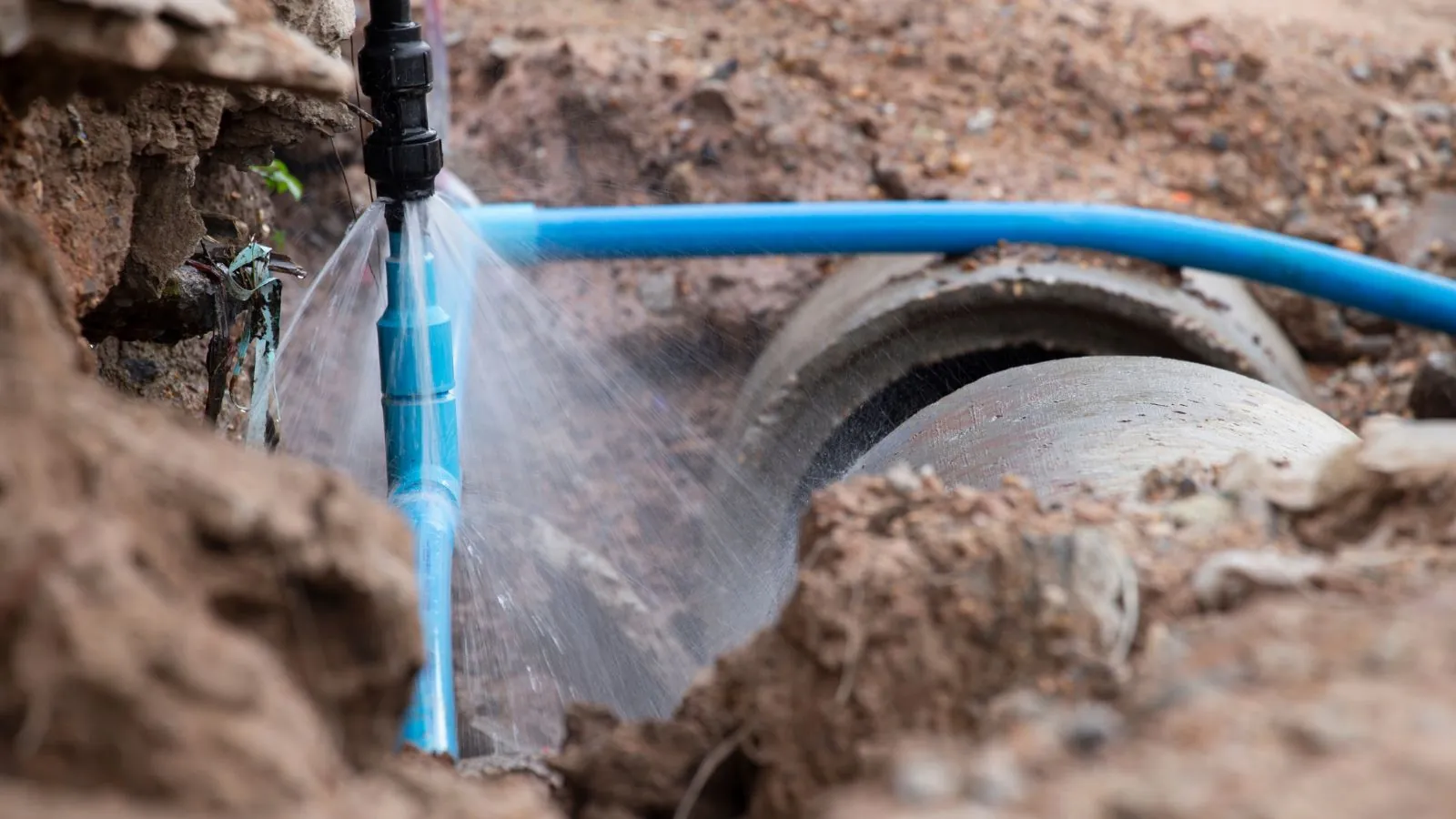
Act in the first hour: what to do before the crew arrives
A burst pipe floods a home fast, so every minute before the water is shut off adds to the repair. Our emergency line is open 24/7. While you wait for a crew, close the main shutoff, open a faucet on the lowest floor to drain the lines and move belongings out of the wet area.
Close the main valve
It is usually near the water meter, in the basement or where the line enters the house. Turn it fully clockwise.
Drain the lines
Open the lowest faucet and flush an upstairs toilet once so the pipes empty and stop feeding the leak.
Protect the electrical system
Keep out of standing water near outlets. If the breaker panel is dry and reachable, switch off circuits serving wet rooms.
Document and call
Photograph the pipe, the wet surfaces and damaged contents. Then call us and your insurer.
Why pipes fail in Duxbury homes
Winter cold snaps are the textbook cause, and Duxbury sees plenty of them off the bay. Water inside a pipe expands as it freezes, and the split usually shows up only when the ice thaws and pressure returns. Our frozen pipe page covers that pattern in more detail.
Age and wear cause just as many failures. Duxbury has homes that date back centuries, including the John Alden House built in 1653, and many older houses have been renovated in stages. A mix of copper, galvanized steel and plastic lines from different decades is common, and joints between them are weak points.
Shoreline cottages and second-floor bathrooms add a different risk. A house left cold or empty for a few days can leak unnoticed until the ceiling below stains or a neighbor reports water. If you are leaving for the winter, shutting off the main is the simplest protection.
Signs a pipe has burst, even when you cannot see water
- Water pressure drops suddenly at several fixtures.
- You hear running water with every tap and appliance off.
- A ceiling shows a brown stain, a bulge or a steady drip.
- Paint bubbles, drywall softens or baseboards swell along a wall.
- The water meter keeps moving after you close every fixture.
- A floor feels warm or spongy in one spot.
Need burst pipe water damage help now?
Call dispatch. We answer 24/7 and start with safe next steps.
How we find the water and dry the structure
We start by confirming the leak is shut off, then map where the water went. Moisture meters read the wetness of drywall, framing and subfloor, and a thermal camera shows cool, wet patches behind finished surfaces. That mapping decides what can be dried in place and what has to come out.
Next comes extraction with pumps or wet vacuums, followed by air movers and LGR dehumidifiers running in a closed room. Wet insulation and soaked drywall near the break are usually removed, often cut a couple of feet above the waterline. The published ANSI/IICRC S500 standard describes the drying goals this process works toward.
We return to log moisture readings until every material reaches its dry standard. Pipe repair itself belongs to a licensed plumber, and we schedule the drying around that work. When the structure is dry, we rebuild the drywall, trim and flooring that were removed.
| Approach | When it fits | Trade-off |
|---|---|---|
| Dry in place | Water reached only the surface and was caught within a day | Fastest and cheapest, but needs close monitoring. |
| Partial removal | Drywall or insulation is saturated near the break | Opens one wall or ceiling section, then patch and paint. |
| Full tear-out | Water ran through several rooms or sat for days | Highest cost, needed when materials will not dry safely. |
Mistakes that make burst pipe damage worse
Most of the avoidable cost in a pipe failure comes from small choices made in the first hours. Waiting to see if the leak stops, mopping without opening the wall and turning the heat off to save money all let moisture settle in. Each of those lets water spread into places you cannot see.
- Waiting for a plumber before shutting off the main valve.
- Running a household vacuum on a wet floor.
- Closing the wall back up without checking inside it.
- Turning the heat down in a wet house, which slows drying.
- Throwing away damaged items before photographing them.
What to have ready when you call
A few facts help dispatch decide what to send and how fast. You do not need all of them, and we will ask the rest. Knowing where the main valve is and what the water has touched is usually enough to start.
- Your address and the nearest cross street.
- Whether the water is still running and whether you have found the main.
- Which floors are wet and how deep the water is.
- Whether the ceiling below is stained or dripping.
- Your insurance company name, if you have it handy.
What drives the cost of burst pipe cleanup
Cost follows how long the water ran, how many rooms it reached and which materials got wet. Hardwood and plaster behave differently from carpet and drywall, and an opened wall means rebuilding afterward. We explain scope and price before work starts, once moisture readings are in.
Insurance often responds to a pipe that bursts suddenly and accidentally. Claims for gradual leaks, or for freezing in a home where heat was not maintained, are more likely to be questioned. Check your policy and ask your insurer, and keep your photos and moisture logs.
Pipe still leaking or water still spreading?
Call dispatch and describe what you see. We will talk you through the first steps.
If the water has already reached the floor below, our water extraction service and structural drying work are the next steps. If anything stayed damp for several days, ask us about mold remediation as well.
Safety steps while you wait
- Close the main water valve before anything else.
- Keep power off in any wet room unless the panel is dry and you can reach it safely.
- Stay out of rooms with a sagging ceiling.
- Photograph the damage before moving belongings.
Our drying approach refers to ANSI/IICRC S500, the published standard for professional water damage restoration.
Burst Pipe Water Damage questions in Duxbury
Do you handle burst pipe water damage emergencies at night or on weekends in Duxbury?
Yes. Dispatch answers all night and on weekends and holidays. Give the operator your address, where the water is coming from and whether the main is shut off.
Should I turn off the electricity after a pipe bursts?
Only if you can reach the breaker panel without stepping through water. If the panel is wet or the floor is flooded, stay out and call for help.
How long does the drying take after a burst pipe?
Most jobs need three to five days of equipment. Deep saturation or hardwood can take longer, and we check readings each visit.
Do you repair the pipe itself?
No. A licensed plumber repairs or replaces the pipe. We handle extraction, drying and the repairs to walls, ceilings and floors that follow.
Will my insurance pay for a burst pipe?
Sudden and accidental pipe failures are often covered, though policies differ. Check your policy and ask your insurer before you decide on repairs.