
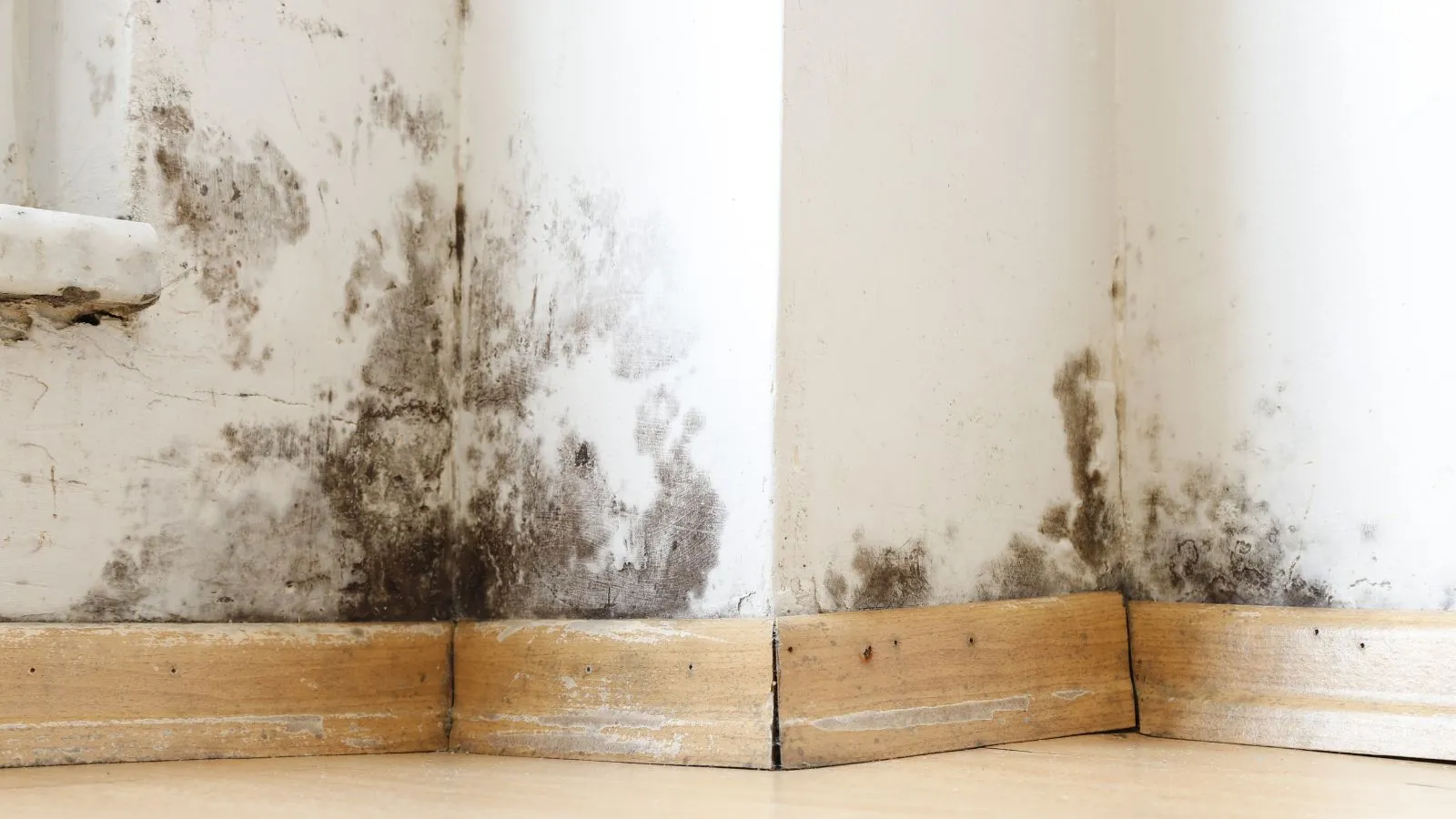
Mold remediation starts with the water source
Mold remediation in Duxbury begins with the water, not the mold. Mold grows on materials that stay damp, so the leak or humidity that fed it has to be fixed first. If a pipe, roof or air conditioner is still leaking, removing mold only sets up a repeat.
We tie every mold job to its source. Callers often tell us about a leak under a sink, a toilet leak above a basement ceiling, a drip from an air conditioner or a wet closet. Those leaks are where the work begins.
Signs you may have mold behind the walls or under the floor
- A musty or earthy smell that stays after cleaning.
- Dark, green or white fuzzy patches on walls, ceilings or trim.
- Paint or wallpaper that bubbles near a past leak.
- Carpet that smells when pulled back, or spots on the tack strip.
- A ceiling stain below a bathroom, kitchen or air handler.
- Odor near basement stairs or in a closet that stays damp.
Mold is not always visible. It can grow inside wall cavities, under flooring and above ceilings. A moisture reading and an inspection can confirm hidden dampness without opening everything.
Testing and inspection: what they do and do not tell you
A mold inspection looks for visible growth, moisture and the conditions that feed it. Air or surface sampling can show what is present and how much, but results need to be interpreted by someone trained to do so. We explain what a test can and cannot tell you, and we do not recommend testing as a reflex.
Independent clearance testing is a separate step. It is done by a third party after remediation to check that the area is clean. If you are selling or refinancing, ask your lender or agent what documentation they require, since requirements vary and we cannot promise what a lender will accept.
Need mold remediation help now?
Call dispatch. We answer 24/7 and start with safe next steps.
How remediation is done
Mold remediation follows a sequence. The published ANSI/IICRC S520 standard describes industry practice for it, and our process follows the same principles. Each step protects the rest of the house from spores that get disturbed.
Fix the moisture
The leak is repaired and wet materials are dried.
Contain the area
Plastic barriers and negative air machines keep disturbed spores in the work zone.
Remove affected material
Drywall, insulation, carpet and other porous materials with growth are cut out and bagged.
Clean and treat
Surfaces are HEPA vacuumed, wiped and treated. Wood framing may be cleaned or sanded.
Verify and rebuild
Moisture is confirmed dry, any clearance testing is completed and the space is rebuilt.
Why mold shows up in Duxbury homes
Duxbury is humid and wet for much of the year. Coastal air, high groundwater and storms keep basements, crawl spaces and closets damp. Our basement page and crawl space page explain those areas.
Plumbing leaks cause a different kind of mold. A slow drip under a bathroom sink or an upstairs toilet leak can feed growth in a ceiling below. If drying was delayed after a leak, structural drying is the first step.
| Situation | Typical response | What to confirm |
|---|---|---|
| Small surface growth on a hard surface | Clean and dry, fix the moisture source | That the source is truly gone. |
| Growth on drywall or ceiling | Cut out and replace affected sections | Hidden growth behind the board. |
| Musty smell, nothing visible | Moisture mapping and inspection | Where the dampness is coming from. |
| Home sale or loan requirement | Remediation plus independent clearance | What the lender or buyer requires. |
Where mold hides after a leak
Mold shows up where water stayed, and some places are easy to miss. A moisture reading can find these areas without tearing everything open. Check them if you have had a leak or flood.
- Behind baseboards and under toe-kicks.
- Inside walls beneath a bathroom or kitchen sink.
- Above a ceiling below a bathroom or air handler.
- Under carpet pad and along the tack strip.
- In a closet that shares a wall with a wet area.
- On the underside of subfloor in a crawl space.
What affects mold remediation costs
Cost depends on how much area is affected, whether growth is inside walls, how much material is removed and whether containment and air filtration are needed. We explain scope and price before work starts.
Insurance for mold depends on the cause and the policy. Mold that follows a sudden covered water loss may be covered, while mold from long-term moisture or neglect is often excluded or limited. Check your policy and ask your insurer.
We do not make health claims about mold, and we do not promise that it will never return. What we do is fix the moisture and clean the area properly. If you have health concerns, talk to your doctor.
Safety steps while you wait
- Fix or shut off the water source first.
- Do not disturb or dry-scrub visible growth.
- Keep the area closed off and turn off fans that spread dust.
- Talk to your doctor about any health concerns, since we make no health claims.
Our mold work refers to ANSI/IICRC S520, the published standard for professional mold remediation.
Mold Remediation questions in Duxbury
Do you remove mold in Duxbury homes?
Yes. We find the moisture source, contain the area, remove affected material and clean the space. The leak has to be fixed first.
Do I need mold testing before remediation?
Not always. Visible growth with a known water source often does not need a test. If you are unsure whether it is mold, or need documentation, ask us what makes sense.
What is independent clearance testing?
It is a check by a third party after remediation to see whether the area is clean. It is useful if a lender, buyer or insurer asks for it.
Can mold be cleaned off with bleach?
Bleach does not remove mold from porous materials, and it adds moisture. Porous materials with growth are removed instead.
Will a lender accept your remediation?
Requirements vary by lender. Ask yours what documentation it needs, and we will tell you what we can provide.
Does insurance cover mold removal?
It depends on the cause. Mold after a sudden covered leak may be covered, while mold from neglect or slow leaks is often not. Check your policy and ask your insurer.