
Signs your house is still wet after the water is gone
A floor can look dry while the subfloor beneath it stays wet. Walls can feel normal while the insulation inside holds water. If you notice a musty smell, windows that fog, cupping floors or peeling paint after a leak, the structure may not be dry.
- A musty or earthy odor that grows when you close the room.
- Hardwood that cups, crowns or gaps after a leak.
- Paint that bubbles or peels, or wallpaper that lifts.
- Baseboards or trim that swell, darken or separate.
- Condensation on windows or a house that feels clammy.
- Moisture readings that stay high after the surface dries.
What structural drying is and how it works
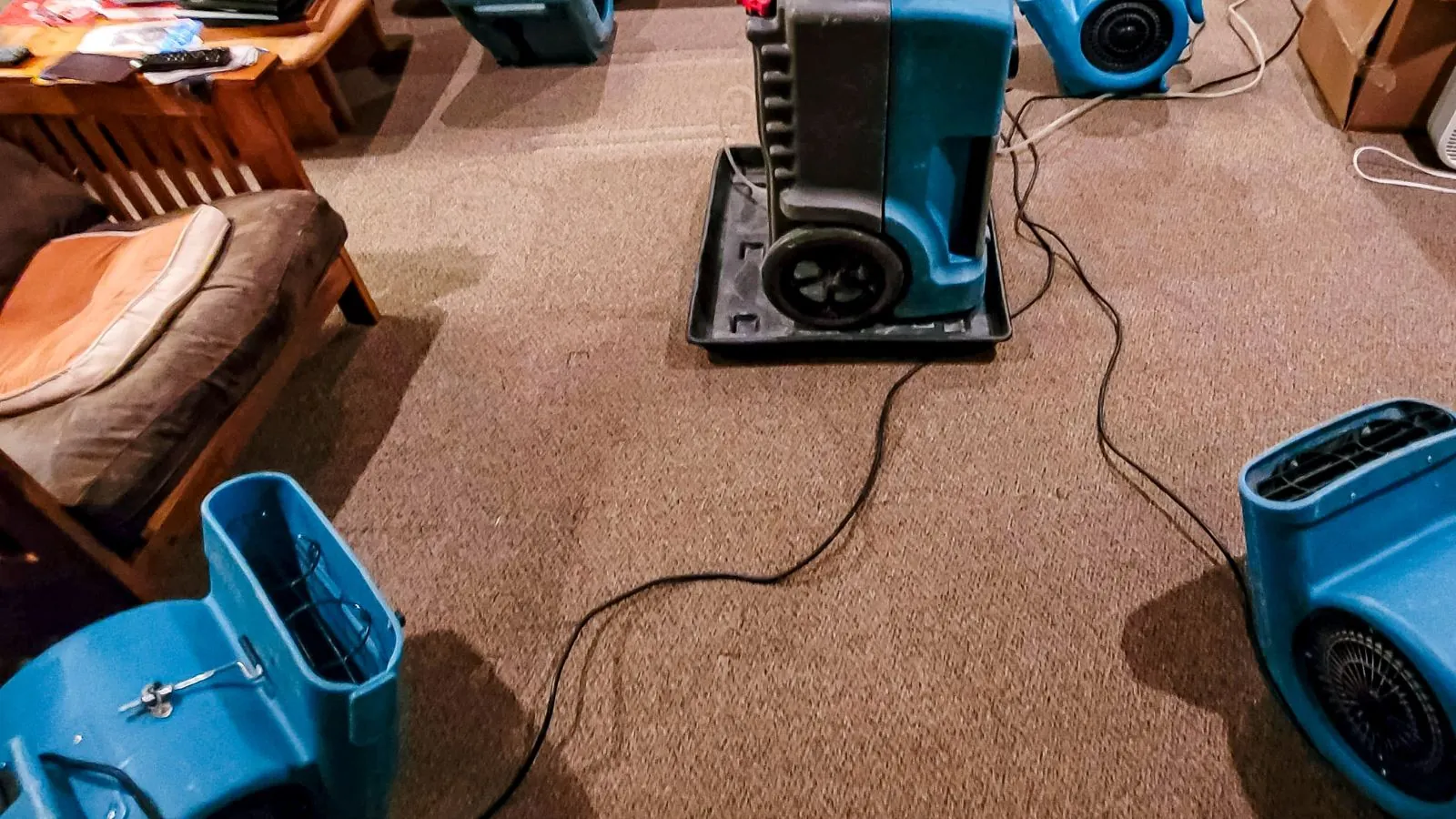
Structural drying removes moisture from building materials, not just from the air. Air movers push dry air across wet surfaces, and dehumidifiers pull the moisture out of the room. The goal is to reach a dry standard for each material, which depends on what it is made of.
We use LGR dehumidifiers, which hold up in cooler conditions, and sometimes desiccant units for very low humidity. Air movers are positioned so that air sweeps each wet wall and floor. Rooms are kept closed during drying so the equipment dries the materials and not the outdoors.
How the drying is measured
Moisture meters read the wetness of drywall, wood and plaster, and a thermal camera maps wet patches. A hygrometer tracks temperature and humidity in each room. We record readings daily and compare them to a dry reference in an unaffected part of the house.
Drying ends when the materials match that reference, not when a set number of days has passed. The published ANSI/IICRC S500 standard describes this approach. Equipment is removed once the readings confirm that the structure is dry.
Need structural drying help now?
Call dispatch. We answer 24/7 and start with safe next steps.
Why drying in Duxbury takes care
Humid summer air off Duxbury Bay slows drying and brings moisture back into a closed house. Winter has its own problem, since cold exterior walls near the shoreline can condense the moisture that drying pulls out. We adjust equipment and airflow to the season and the building.
Older homes often have layered construction with plaster, lath and past repairs. Moisture can sit between layers where it is hard to reach. Sometimes drilling small holes or lifting trim gives drying air a way into the cavity. See our wall and drywall page for how those cavities are handled.
| Method | What it does | Good for |
|---|---|---|
| Air movers and LGR dehumidifiers | Evaporate and remove surface and shallow moisture | Most walls, floors and carpet. |
| Injection drying | Forces dry air into wall cavities or under floors | Hardwood, cabinet bases, wall cavities. |
| Desiccant dehumidifier | Dries air at very low humidity | Cold spaces and tough jobs. |
| Containment with negative air | Isolates a wet area and controls air flow | Areas where mold is suspected. |
What each piece of drying equipment does
Air movers
Fans that push air across wet surfaces. They speed evaporation from floors, walls and carpet.
LGR dehumidifiers
Machines that pull the evaporated moisture out of the air and collect it as water.
Injection systems
Hoses and mats that force dry air into wall cavities, under floors and inside cabinet bases.
Moisture meters and thermal cameras
Tools that show what is wet, so equipment is placed where it matters.
Running a house this way means loud equipment and higher electric use for a few days. We explain how many machines to expect and for how long, so the bill and the noise are not a surprise.
What affects structural drying costs
Cost follows how many rooms are wet, how long the equipment has to run and how hard the materials are to dry. Hardwood and concrete take longer than carpet. We explain scope and price before work starts.
Insurers often cover drying after a sudden covered loss, and they may ask for moisture logs. Gradual moisture and humidity problems are often excluded. Check your policy and ask your insurer, and keep the daily readings we give you.
If a musty smell remains after drying, see our mold remediation page. For the first step before drying begins, see water extraction.
Safety steps while you wait
- Shut off the water source if you can do so safely.
- Keep children and pets out of wet areas and away from cords.
- Do not use fans on sewage or floodwater.
- Keep damaged items until your insurer has seen them.
Drying goals and equipment placement follow the principles in ANSI/IICRC S500, the published standard for water damage restoration.
Structural Drying questions in Duxbury
How do I know the structure is dry?
Moisture meters and thermal imaging confirm it. We compare readings to a dry reference in an unaffected part of the house, and we do not remove equipment before they match.
How long does structural drying take?
Three to five days is typical, though thick materials, hardwood and cold conditions can add time.
Why not just run a household dehumidifier?
A household unit cannot match the airflow and capacity of professional equipment. Without airflow across the wet material, it dries the room air, not the walls and floors.
Do you offer structural drying after a leak found late?
Yes. Call and describe what you see. We check moisture first, then explain what drying or removal is needed.
Will drying stop mold from growing?
Quick drying removes the moisture mold needs. If a leak has already sat for days, we check for growth too.