
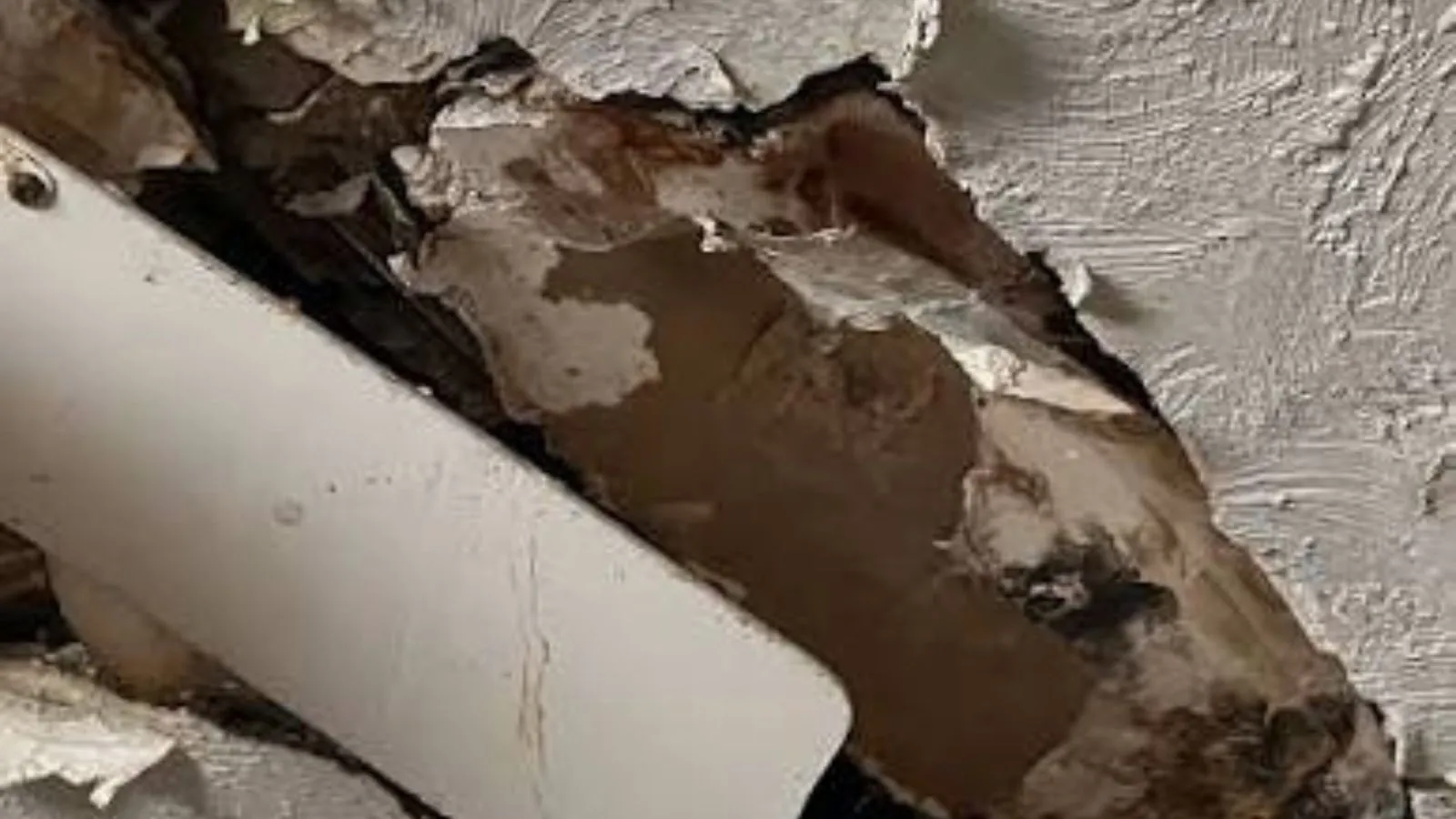
Wall and drywall water damage repair: how to spot a wet wall
Wall and drywall water damage repair begins by finding where the water went. Paper-faced drywall wicks water upward, so a wet baseboard can mean a wall that is damp a foot or two above it. Gypsum board loses strength when it is wet, and it can grow mold behind the paper in days.
- Paint that bubbles, peels or stains in a ring.
- Drywall that feels soft, crumbles or sags when pressed.
- Baseboards that swell, darken or pull from the wall.
- A musty smell near a wall that looks dry.
- Seams or tape that crack and open.
- Wallpaper that lifts or discolors.
How water gets into walls in Duxbury homes
Walls get wet from inside and outside. Pipes that run through the wall, a leaking window or a roof leak all send water down the cavity. Duxbury's coastal weather drives rain sideways, which finds weak points around windows, flashing and siding.
Older homes have plaster and lath instead of drywall, especially in houses built before the mid-1900s. Plaster dries differently and can be repaired in ways drywall cannot. Many Duxbury houses have both, because renovations replaced some walls and left others.
How we dry and repair a wet wall
We map the wet area with moisture meters and a thermal camera, and we check the wall on both sides. Insulation inside the wall holds water and is usually removed. A small inspection hole shows what is inside before we decide how much to open.
Drywall that is saturated, crumbling or moldy is cut out, usually about two feet above the visible damage, and the studs are dried with air movers and a dehumidifier. Drying air can be injected into the cavity through small holes. We confirm dry readings before closing the wall.
Need wall and drywall water damage help now?
Call dispatch. We answer 24/7 and start with safe next steps.
Rebuilding the wall so the repair disappears
New drywall is hung, taped and finished, and the texture is matched. Priming before paint stops patches from showing through. Painting a full wall, corner to corner, avoids color mismatch.
| Condition | Repair | What follows |
|---|---|---|
| Dry stain, no softness | Seal, prime and repaint | Confirm the source is fixed. |
| Damp but intact drywall | Dry in place and monitor | Repaint after readings are dry. |
| Soft or crumbling drywall | Cut out, dry framing and replace | Tape, texture, prime and paint. |
| Plaster damage | Dry, patch or re-skim | Matching old plaster takes skill. |
Special cases: insulation, plaster and tile walls
Not every wall is the same, and the right repair depends on what is inside it. Fiberglass insulation soaked with water usually needs to come out. Dense-pack or spray foam insulation behaves differently and may need to be assessed carefully.
Plaster and lath can often be dried and repaired in place. Tile walls hide moisture behind the tile, so a moisture reading through a small test hole is useful. We tell you what we find before we decide how much to open.
What affects wall water damage repair costs
Price depends on how much wall is affected, whether insulation is wet, how much framing must dry and the finish to match. A single patch is a small job, while multiple rooms are not. We explain scope and price before work starts.
Insurance often covers sudden leaks inside walls, and sometimes the cost of opening the wall to find them. Damage from long-term seepage or window leaks left unrepaired is often excluded. Check your policy and ask your insurer.
If the wall is wet because of a ceiling leak above, see ceiling water damage repair. For pipes in the wall, see burst pipe damage.
Safety steps while you wait
- Keep furniture and foot traffic off the wet floor.
- Lift rugs and small items so they do not stain the surface.
- Do not use heat guns or high heat to dry boards.
- Photograph the damage before moving anything.
We refer to ANSI/IICRC S500, the published restoration standard, when we judge whether a floor can be dried or must be replaced.
Wall and Drywall Water Damage questions in Duxbury
How do I know if a wall is wet inside?
A moisture meter and a thermal camera show it. Soft drywall, bubbling paint and swollen baseboards are warning signs.
Do you have to cut out the drywall?
Not always. Dry stains can be sealed, and damp drywall caught early may dry in place. Saturated, crumbling or moldy drywall is removed.
Can wet plaster be repaired?
Often yes. Plaster can be dried and patched, although matching old plaster takes skill.
How long before a wet wall grows mold?
Mold can begin growing within days of a leak. Quick drying lowers the chance.
Does insurance cover water inside a wall?
Often for sudden leaks, not for slow ones. Check your policy and ask your insurer.