
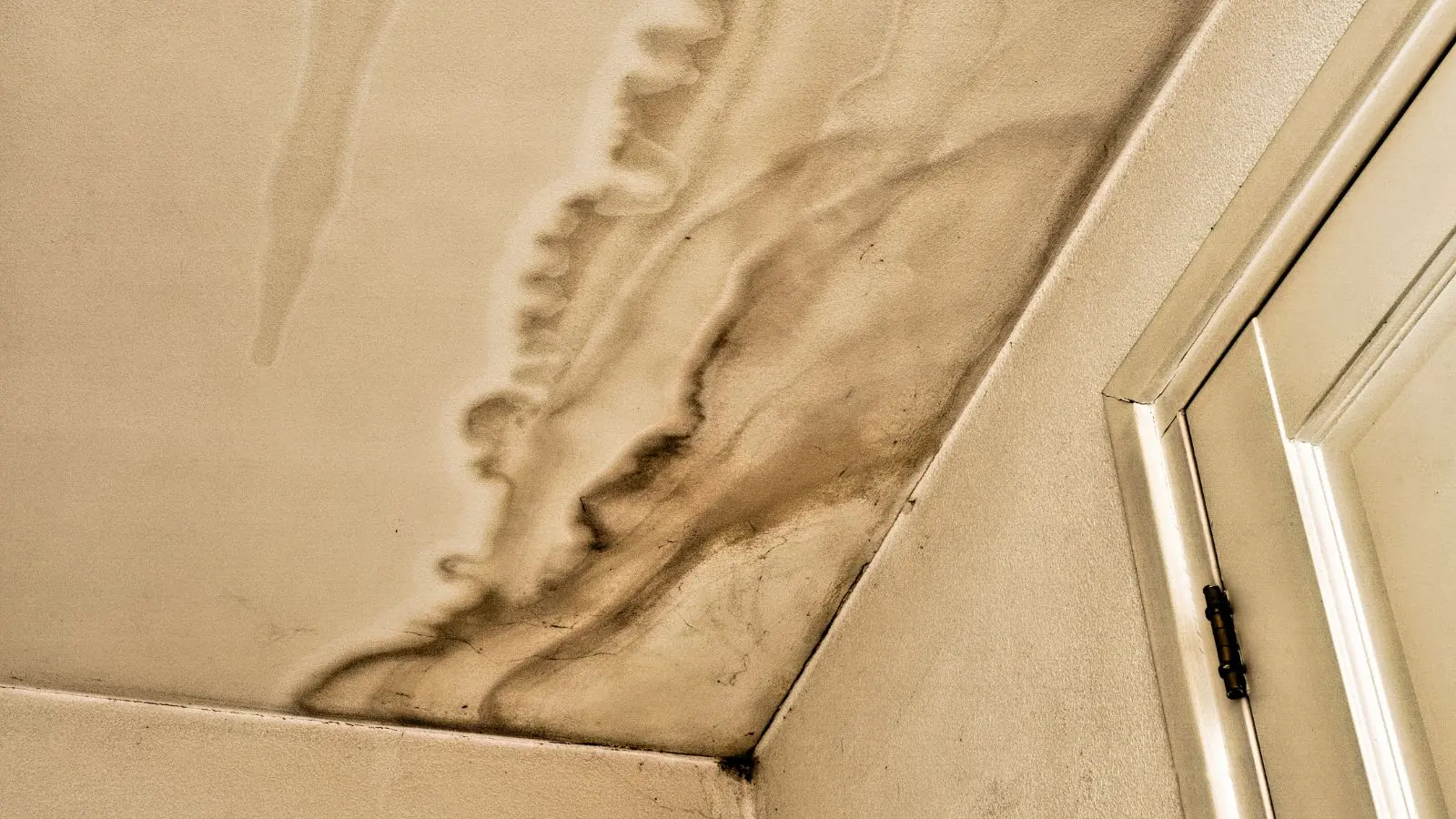
A dripping or bulging ceiling needs attention today
Water trapped above a ceiling can bring the drywall down without warning. Our emergency line is open 24/7. If a ceiling is bulging, place a bucket under the drip, move furniture and electronics away and do not stand under a sagging patch.
If the bulge is full of water, a small hole drilled at the lowest point lets it drain into a bucket in a controlled way. Never cut into a ceiling near light fixtures or wiring. Call for help if you are not sure.
Where ceiling leaks come from
- A roof leak from damaged shingles, flashing or a clogged gutter.
- A plumbing leak from an upstairs bathroom, kitchen or supply line.
- An air conditioner or air handler drain line in the attic.
- Ice dams that push melting snow under the roof edge.
- Condensation in an attic that is poorly ventilated.
Finding the source is the first job. A stain that shows up after rain points to the roof, while one that comes and goes with a shower or dishwasher points to plumbing. Water travels along framing, so the stain is often far from the actual leak.
Roof leaks over Duxbury ceilings
Roof leaks are a big share of the ceiling calls we expect around Duxbury, because coastal wind and storms work on shingles and flashing. A nor'easter can lift shingles or drive rain sideways under flashing, and the water shows up as a stain days later. Ice dams in winter create a second route, pushing meltwater under shingles at the eaves.
Chimneys, skylights, vent pipes and valleys are the usual weak points. Water follows rafters and drips from a nail head, then spreads across the ceiling in a ring. A roofer repairs the roof, and we handle the interior damage and the insulation that got wet.
Tell us when the stain first appeared and whether it follows rain, snow melt or a plumbing event. That timing helps separate roof, plumbing and condensation causes. For storm-driven entry, see our storm water damage page.
Need ceiling water damage repair help now?
Call dispatch. We answer 24/7 and start with safe next steps.
How we dry and repair a water-damaged ceiling
We map the wet area with moisture meters and a thermal camera, looking above the ceiling as well as at it. Wet insulation and sagging drywall are removed, and the framing is dried with air movers and a dehumidifier. Cutting out the damaged section in a straight line makes the patch cleaner.
After readings confirm dry framing, we install new drywall, tape, texture to match and prime. Painting the whole ceiling, rather than the patch alone, avoids a visible blotch. If the ceiling was textured or has an unusual finish, we try to match it before we start.
| Condition | Repair | Notes |
|---|---|---|
| Faint stain, dry drywall | Seal, prime and paint | Confirm the leak has stopped first. |
| Wet but intact drywall | Dry in place if caught early | Monitor moisture over several days. |
| Sagging or bubbled drywall | Cut out and replace the section | Replace wet insulation above. |
| Widespread water damage | Replace the ceiling in the room | Rebuild finish after drying. |
What not to do with a wet ceiling
- Do not paint over a stain until the source is fixed and the area is dry.
- Do not poke a bulging ceiling near a light fixture or wiring.
- Do not leave wet insulation in the attic to dry on its own.
- Do not ignore a stain that grows after rain or after a shower.
- Do not climb onto a wet roof to look for the leak.
Each of these makes a small problem bigger or adds a safety risk. A photo of the stain with a pencil mark around its edge lets you see whether it is growing from day to day.
Cost factors for ceiling water damage repair
Price follows the size of the wet area, whether insulation must be replaced and how much of the ceiling needs refinishing. A small patch is a minor job, while a full room ceiling is not. We explain scope and price before work starts.
Insurance for ceiling damage depends on the cause. A sudden plumbing failure or storm-driven rain is often covered, while a slow leak from a worn roof is often treated as maintenance. Check your policy and ask your insurer.
If a ceiling stain keeps returning, the source may not be fixed. For plumbing causes see burst pipe damage, and for hidden air conditioner leaks see AC leak water damage.
In attached homes a ceiling stain can come from the unit above. The page for Bay Farm explains who to notify in a townhouse or condo community.
Safety steps while you wait
- Stay out of flooded rooms until the power is off.
- Treat floodwater as contaminated and avoid contact.
- Do not walk on a sagging ceiling or soft floor.
- Photograph the damage and the water line before cleanup.
Water from outside is classed by contamination level in ANSI/IICRC S500, the published standard we refer to for these jobs.
Ceiling Water Damage Repair questions in Duxbury
Do you handle ceiling water damage emergencies at night or on weekends in Duxbury?
Yes. A sagging ceiling is urgent at any hour. Dispatch is open every day and will tell you how to contain the water.
Do you fix the roof?
A roofer repairs the roof. We dry the interior, remove wet insulation and drywall and repair the ceiling after the leak is stopped.
Can I paint over a water stain?
Not until the source is fixed and the area is dry. Stain-blocking primer helps, but paint alone will not stop a leak or hide a wet ceiling.
How do I tell a roof leak from a plumbing leak?
Roof leaks usually follow rain or snow melt. Plumbing leaks follow water use. Water travels, so the stain may not sit under the source.
Is a ceiling stain a sign of mold?
Sometimes. A ring that stays damp or smells musty may have mold above it. We check hidden moisture before repairs.