
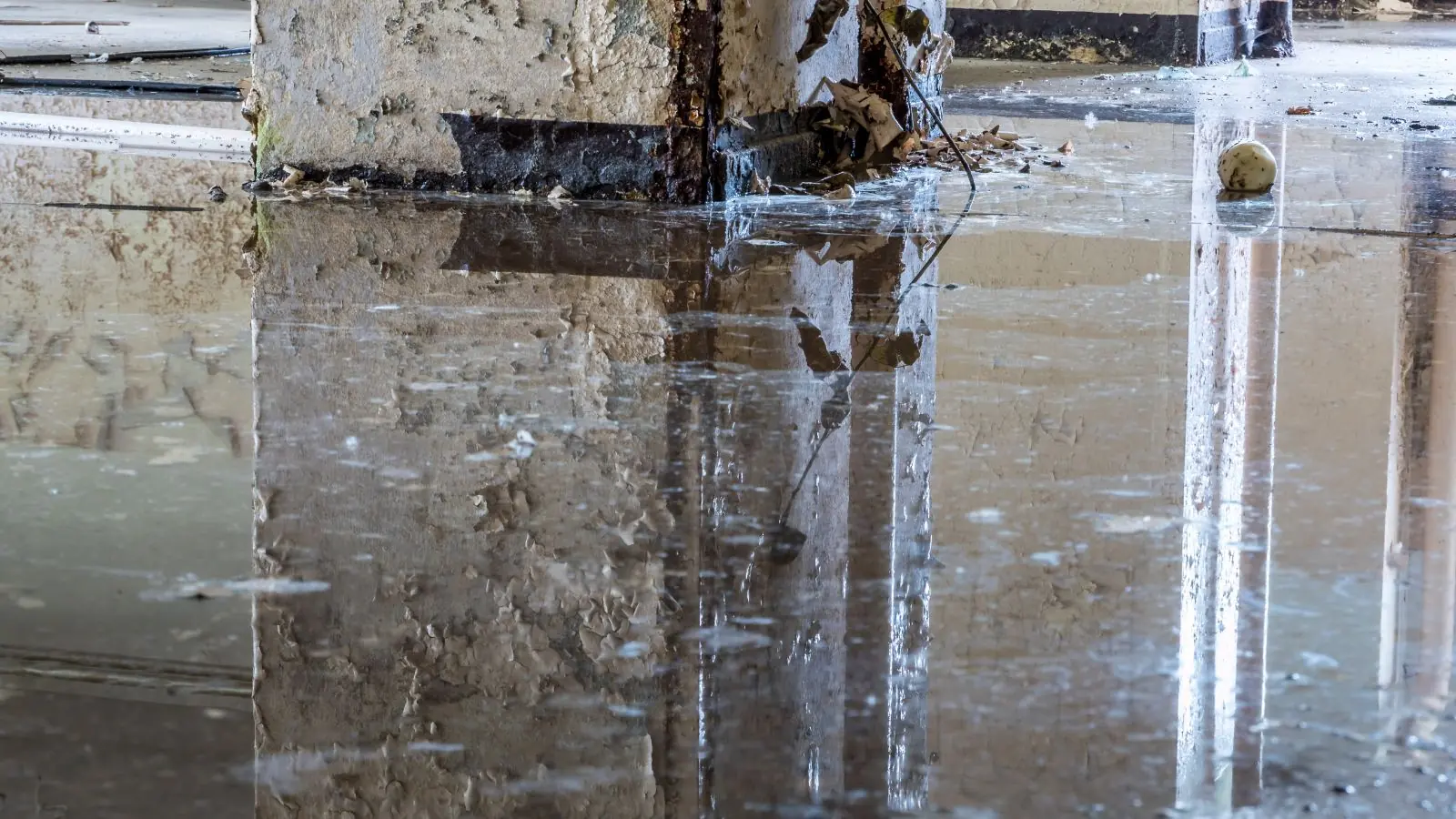
Remove standing water first: what to do while you wait
Water that stands on a floor soaks into subfloors, baseboards and wall bases within hours. Our emergency line is open 24/7. While you wait for a crew, stop the source if you can, keep out of the water near electrical equipment and lift what you can onto dry surfaces.
Do not use a household vacuum on standing water, since it is an electrical shock risk. Towels and mops can help with a thin film, but deeper water needs pumps and extraction units. Photograph the damage before you begin.
What emergency water extraction involves
Water extraction is the removal of standing and absorbed water from a building. It is the first stage of water damage restoration, and it decides how much drying and rebuilding is needed afterward. The faster the bulk water is out, the less of the structure it reaches.
We use submersible pumps for deeper water, truck-mounted or portable extraction units for carpet and floors and wet vacuums for the rest. Weighted extraction tools press water out of carpet and pad. Hard floors are squeegeed and vacuumed.
Why extraction speed matters in Duxbury
Duxbury homes are often built on or near water, and storms and high tides can push water into basements and first floors. Water that sits on hardwood can cup the boards within a day or two. Water in a basement can wick up the base of drywall in hours. Our basement page and flood page show what that looks like.
Winter adds a second problem. A burst pipe in a closed-up shoreline home may run for days before it is found. By then, water has soaked through floors and reached the rooms below. Quick removal limits how many rooms have to be opened.
Need water extraction help now?
Call dispatch. We answer 24/7 and start with safe next steps.
How we extract water, step by step
Confirm the source is off
Water cannot be removed while it is still running. A closed valve or a stopped pump comes first.
Check electrical safety
We look for submerged outlets, appliances and cords before any equipment is placed.
Remove bulk water
Pumps, extraction units and wet vacuums take out the standing water.
Lift and press
Carpet is lifted where needed, and pad that cannot be dried is removed. Floors are extracted by weight or by tool.
Move into drying
Air movers and dehumidifiers go in, with moisture readings guiding how long they run.
Extraction alone does not make a home dry. Water absorbed into drywall, framing and subfloor stays behind, and it needs controlled drying. That is why extraction and structural drying are planned as one job.
| Equipment | Best for | Limits |
|---|---|---|
| Submersible pump | Deep standing water in basements | Leaves a thin film that needs vacuuming. |
| Truck-mounted unit | Large areas of carpet and pad | Needs hose access to the room. |
| Portable extractor | Rooms with limited access | Smaller tanks, more trips. |
| Wet vacuum | Corners, stairs and small pools | Slow for large volumes. |
What to expect when the crew arrives
The crew starts with safety, then sets up the extraction equipment. They will ask where the water came from and what you have already done. Expect hoses through doors and windows, and some noise while pumps run.
Before leaving, the crew explains what was removed, what drying is next and what to avoid. You will also get a list of items to photograph for your insurer. Keep children and pets away from hoses and cords.
What affects water extraction cost
Cost follows the volume of water, how long it has stood, how many rooms are affected and how hard the area is to reach. A shallow spill is brief work, while a flooded basement takes much longer. We explain scope and price before work starts.
Insurers generally respond to sudden water events, and they expect prompt mitigation. Slow or long-ignored leaks are often excluded, and flood usually needs separate coverage. Check your policy and ask your insurer, and keep records of when you called us and what was done.
The cause shapes the cleanup. For a split line see burst pipe damage, and for water from a machine see appliance leak damage.
Safety steps while you wait
- Shut off the water source if you can do so safely.
- Keep children and pets out of wet areas and away from cords.
- Do not use fans on sewage or floodwater.
- Keep damaged items until your insurer has seen them.
Drying goals and equipment placement follow the principles in ANSI/IICRC S500, the published standard for water damage restoration.
Water Extraction questions in Duxbury
Do you handle water extraction emergencies at night or on weekends in Duxbury?
Yes. Water does not wait for business hours, and dispatch answers every day. Call and describe how deep the water is and where it came from.
Can I use a shop vacuum to remove standing water?
A wet-dry shop vacuum rated for water can handle small pools, but never use a household vacuum. Keep the cord and your feet out of deep water, and call if outlets are submerged.
How fast should water be removed?
As fast as possible, ideally within the first day. Water that sits longer moves into subfloors and wall cavities and raises the chance of mold.
Will extraction dry my house completely?
No. It removes standing and surface water. Absorbed moisture in walls, framing and subfloor needs air movers and dehumidifiers.
Does insurance pay for water extraction?
Often, for a sudden covered loss. Check your policy and ask your insurer, and keep your photos and invoices.