
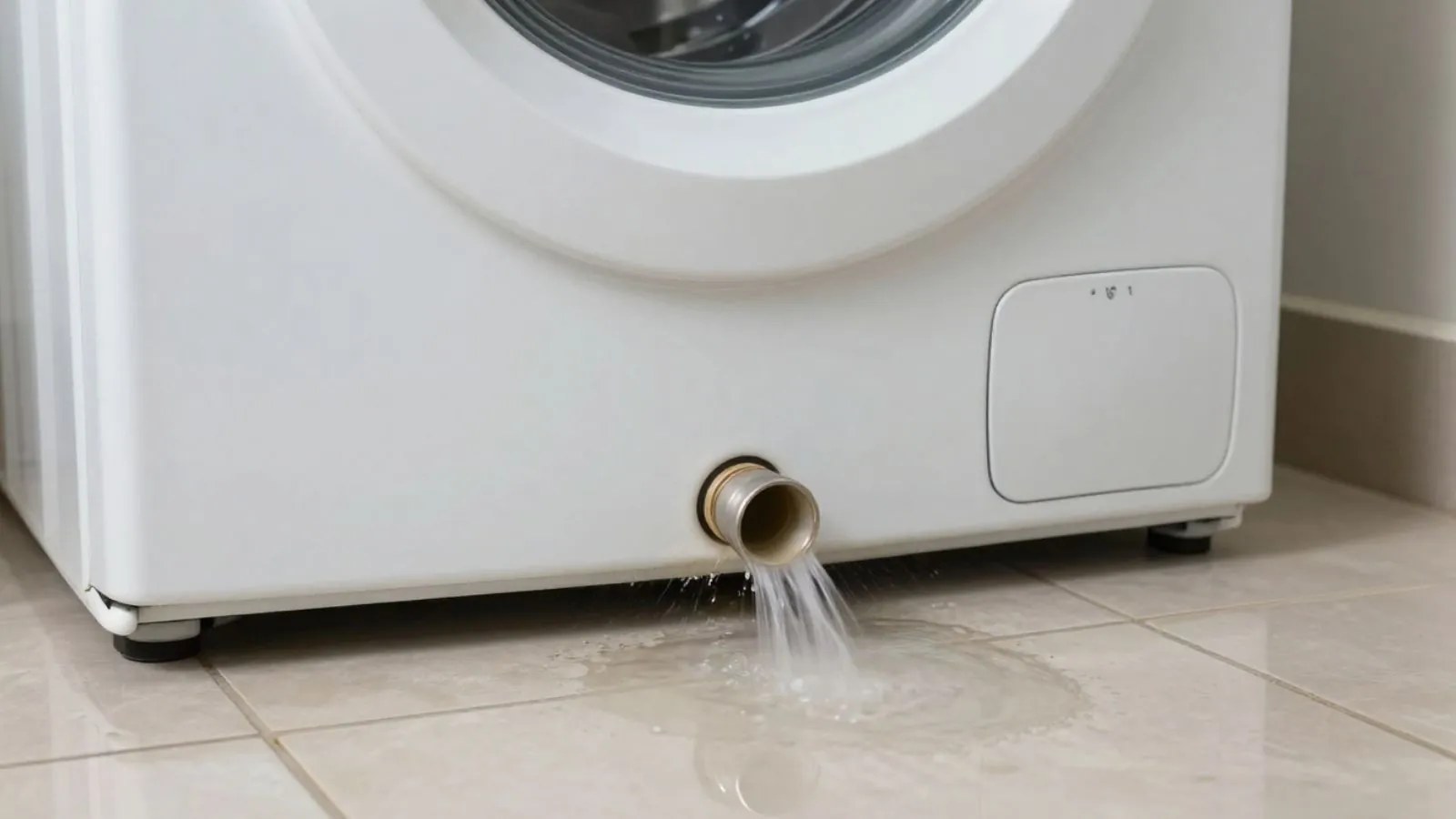
An appliance is leaking: do this before the water reaches the next room
An appliance leak can run for hours before anyone sees it, especially a washer in a basement or a dishwasher under a counter. Our emergency line is open 24/7. Close the shutoff valve behind the machine, unplug it only if the cord and floor are dry, and mop up what you can with towels.
If the floor is already wet around the outlet, leave the appliance plugged in and shut off the breaker for that circuit instead. Take photos of the hose, the valve and the wet area before you move anything.
Which appliances cause the most trouble
Washing machines
Rubber supply hoses crack or burst at the connection. A hose left under pressure for years is a common source of a sudden flood.
Dishwashers
Door seals, inlet valves and drain hoses can leak slowly into the cabinet base and the subfloor below.
Refrigerators with ice makers
A tiny plastic supply line behind the unit can drip for weeks, soaking the floor out of sight.
Sinks and disposals
Loose traps and cracked connections under a sink drip onto cabinet floors and rot the wood.
Most of these leaks use clean supply water, which is the easiest category to dry. That changes if a drain line is involved. Water from a dishwasher or washer drain carries soap and food residue, which is treated with more care.
Why appliance leaks do hidden damage in Duxbury homes
Many Duxbury laundry rooms are in basements or utility closets, where nobody checks for drips. Older homes often have laundry in a corner of a cellar with a floor drain that may be dry or blocked. Water spreads along the slab to wherever it can go.
Kitchen leaks are different. Water collects inside cabinets and under floors, so the first sign is often a soft spot in the flooring or a musty smell. See our kitchen water damage page for that side of the problem.
Need appliance leak water damage help now?
Call dispatch. We answer 24/7 and start with safe next steps.
How we dry out after an appliance leak
We map the wet area with moisture meters and a thermal camera, then pull baseboards and toe-kicks to check the cavity behind them. Pumps or wet vacuums remove standing water. Air movers and dehumidifiers dry the floor and wall bases.
Cabinets are the common casualty. Particleboard swells and does not recover, while solid wood and plywood often dry if the water is caught early. We tell you which pieces can be saved and which should be replaced, so you are not paying to dry something that will fail anyway.
| Material | Held water for | Likely result |
|---|---|---|
| Vinyl or tile floor | Under a day | Dries well, check the subfloor. |
| Hardwood floor | One to three days | May cup, drying mats can help, see the hardwood page. |
| Particleboard cabinet base | Any length of time | Usually replaced. |
| Drywall at the baseboard | Over a day | Cut out a section, dry and patch. |
A quick prevention check for each appliance
Most appliance floods are preventable with a few minutes of attention each year. Inspect the connections, replace aging parts and know where each shutoff valve is. Tape a note by the laundry room door so everyone in the house can find the valves in an emergency.
- Washer: swap rubber hoses for braided steel and close the valves when you are away for days.
- Dishwasher: look under the unit for dark marks and check the door gasket for cracks.
- Refrigerator: inspect the ice maker line and pull the unit out yearly to check the floor.
- Sink: feel the supply lines and trap for dampness each time you replace cleaning supplies.
- Water heater and softener: check the base for rust and moisture.
What affects the cost of appliance leak cleanup
Cost follows the number of rooms affected, how long the water ran, the type of flooring and whether cabinets or drywall must be replaced. A caught-early drip is far cheaper than a leak that ran for days. We explain scope and price before work starts.
Insurers often cover water damage from a sudden appliance failure, but not the appliance itself. Damage from a leak that went on slowly for weeks may be excluded as long-term seepage. Check your policy and ask your insurer, and keep the failed hose or part.
To prevent a repeat, replace rubber washer hoses with braided steel and check connections every year. If a leak ran behind a wall, our wall and drywall page explains the rebuild.
Safety steps while you wait
- Unplug the appliance only if the cord and outlet are dry.
- Close the supply valve behind or under the unit.
- Do not use a household vacuum on standing water.
- Photograph the damage and keep the failed hose or part.
We refer to ANSI/IICRC S500, the published restoration standard, when we set drying goals for floors and cabinets.
Appliance Leak Water Damage questions in Duxbury
Do you handle appliance leak water damage emergencies at night or on weekends in Duxbury?
Yes. Appliances leak whenever they leak, and dispatch answers every day. Tell us whether the valve is closed and where the water has gone.
Should I unplug the appliance first?
Only if the cord and the floor around the outlet are dry. If not, shut off the circuit at the breaker panel instead and call for help.
Can wet cabinets be saved?
Solid wood and plywood often can if they are dried quickly. Particleboard usually swells and has to be replaced.
How do I stop a washer hose from bursting?
Replace rubber hoses with braided steel, close the supply valves when you leave home for a long time and check connections once a year.
Will insurance pay for a leaking dishwasher?
Often yes for sudden failures, though policies differ and slow leaks may be excluded. Check your policy and ask your insurer.