
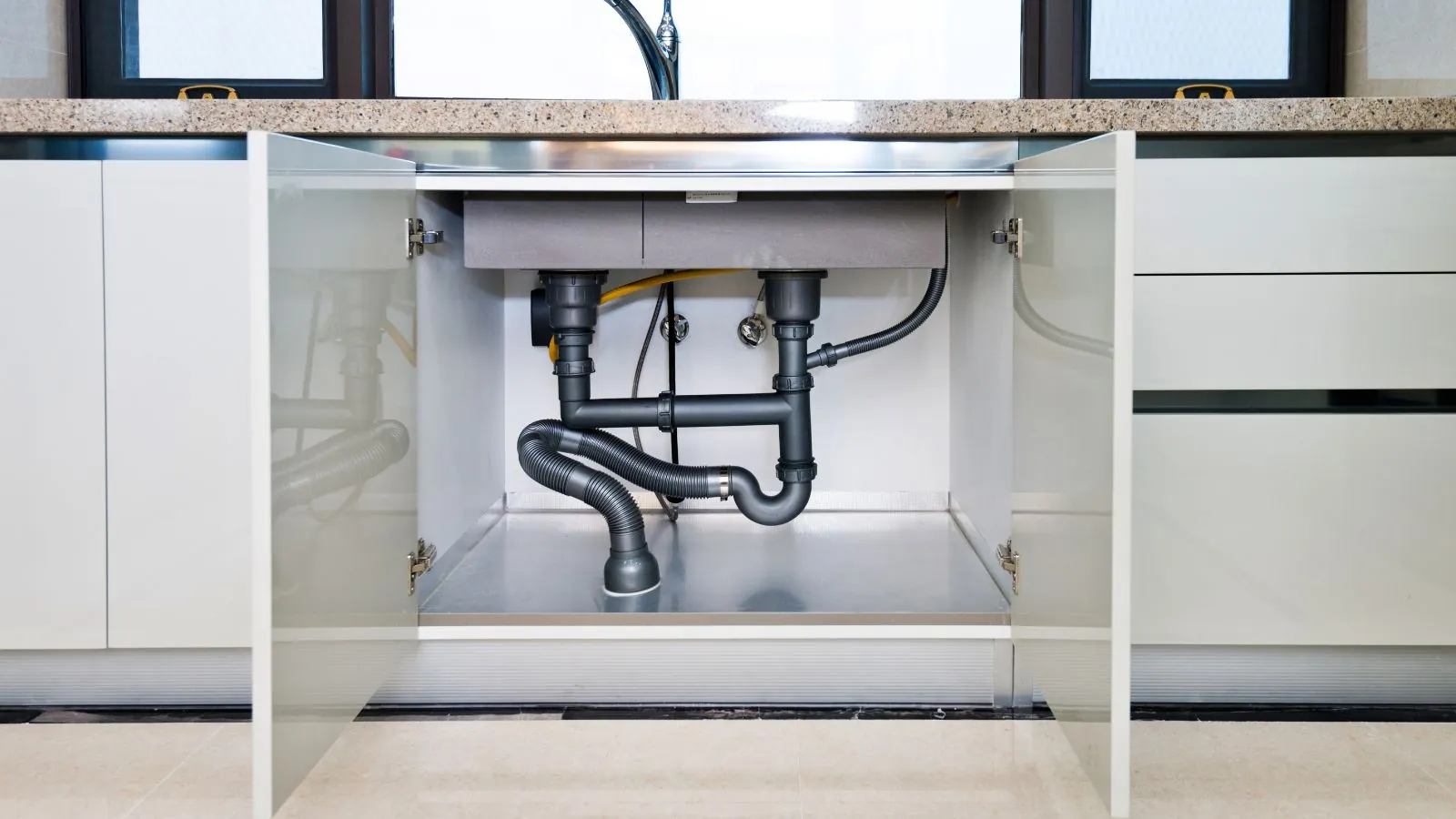
Kitchen water damage restoration, from the first drip to the finished floor
Kitchen water damage restoration covers drying, removing ruined materials and rebuilding the cabinets, flooring and walls the water reached. Kitchens combine plumbing, appliances and tightly built cabinetry, so a small leak can travel far. If you see water, shut the valve under the sink or behind the appliance and call.
The work is more than drying because kitchens are finished spaces. Countertops, backsplash, flooring and trim have to come back looking right. We plan the drying with the rebuild in mind so you do not pay to dry something that will be replaced anyway.
Where kitchen leaks start and where they hide
- Sink supply lines and shutoff valves under the cabinet.
- Faucet bases and sprayer hoses that drip into the cabinet.
- Dishwasher inlet valves, door seals and drain hoses.
- Refrigerator ice maker lines behind the unit.
- Pipes in the wall behind the range hood or backsplash.
- Roof or upstairs bathroom leaks that come through the kitchen ceiling.
The damage often hides. Water runs into the cabinet floor, under the toe-kick and into the subfloor, and the first sign may be a soft floor or a sour smell. Because kitchens sit on top of plumbing and appliances, moisture mapping is the only reliable way to see how far it went.
Why Duxbury kitchens deserve a closer look
Many Duxbury homes have kitchens that were remodeled over the years, with newer cabinets and appliances attached to older plumbing. Census data show a median owner-occupied home value near $875,000, so a kitchen rebuild represents real money. Matching existing cabinets and finishes is part of the job.
Homes by the water can carry added humidity. Moisture lingers longer in a closed kitchen, so drying and ventilation matter. See our structural drying page for how dehumidifiers are sized to a space.
Need kitchen water damage help now?
Call dispatch. We answer 24/7 and start with safe next steps.
What the cleanup and rebuild involve
Stop and extract
The valve is closed and standing water is removed from the floor and cabinet bases.
Map and open
Moisture meters and thermal imaging show wet areas. Toe-kicks and wall bases are removed to expose the cavity.
Dry
Air movers and dehumidifiers run, with injection drying for cabinet bases and floor cavities when needed.
Decide what to replace
Particleboard cabinets and soaked subfloor usually go. Solid cabinets and tile often stay.
Rebuild
Drywall, flooring, trim and cabinet sections are restored to match what was there.
| Component | Often saved | Often replaced |
|---|---|---|
| Cabinet boxes | Solid wood or plywood, dried quickly | Particleboard that has swollen. |
| Flooring | Tile and sheet vinyl | Laminate and floating floors that cupped. |
| Subfloor | Plywood dried within a day or two | Boards that stayed wet for days. |
| Drywall | Sections above the waterline | Bottom sections that wicked water. |
What to ask when you compare kitchen restoration scopes
A good scope names each material and what will be done to it. Vague line items make it hard to compare one company with another. Ask for a written scope and read it before work begins.
- Which cabinets will be dried and which will be replaced?
- Is the flooring being dried, repaired or replaced, and why?
- Will the toe-kicks and wall bases be opened for drying?
- Who handles countertop removal and reinstallation, and is it in the scope?
- What happens if moisture readings show more damage after the walls are open?
Our own scopes list each item, and we explain changes before they are done. For help reading a scope, see how a restoration estimate is laid out when you ask us for one.
What affects the price of a kitchen water damage job
Cost follows the number of cabinets and the amount of flooring affected, the finishes that must be matched and how deep the water went. Drying alone costs far less than drying plus a rebuild. We explain scope and price before work starts.
Insurance often responds to a sudden kitchen leak, such as a failed supply line, and may cover the rebuild. Damage from a slow drip under a sink that was ignored for months is often excluded. Check your policy and ask your insurer, and take photos before any cabinet is moved.
If your leak started with a machine, see our guide to appliance leak water damage. If the floor has buckled, the hardwood floor repair page explains the options.
Village-center houses and shops have their own page: water damage restoration in Hall's Corner.
Safety steps while you wait
- Unplug the appliance only if the cord and outlet are dry.
- Close the supply valve behind or under the unit.
- Do not use a household vacuum on standing water.
- Photograph the damage and keep the failed hose or part.
We refer to ANSI/IICRC S500, the published restoration standard, when we set drying goals for floors and cabinets.
Kitchen Water Damage questions in Duxbury
Can kitchen cabinets be saved after a leak?
Solid wood and plywood often can if dried quickly. Particleboard swells and usually has to be replaced. We tell you which is which after moisture readings.
How long does kitchen water damage restoration take?
Drying usually takes three to five days. A rebuild with new cabinets or flooring can add days or weeks depending on materials and lead times.
Should I stop using the kitchen after a leak?
Yes. Keep the area clear, avoid running the dishwasher and do not use appliances near wet floors until the area has been checked.
Can you match my existing cabinets and floors?
We match finishes as closely as possible and tell you before work starts if a perfect match is not available.
Does insurance cover a kitchen leak?
Sudden leaks are often covered. Gradual leaks often are not. Check your policy and ask your insurer.