
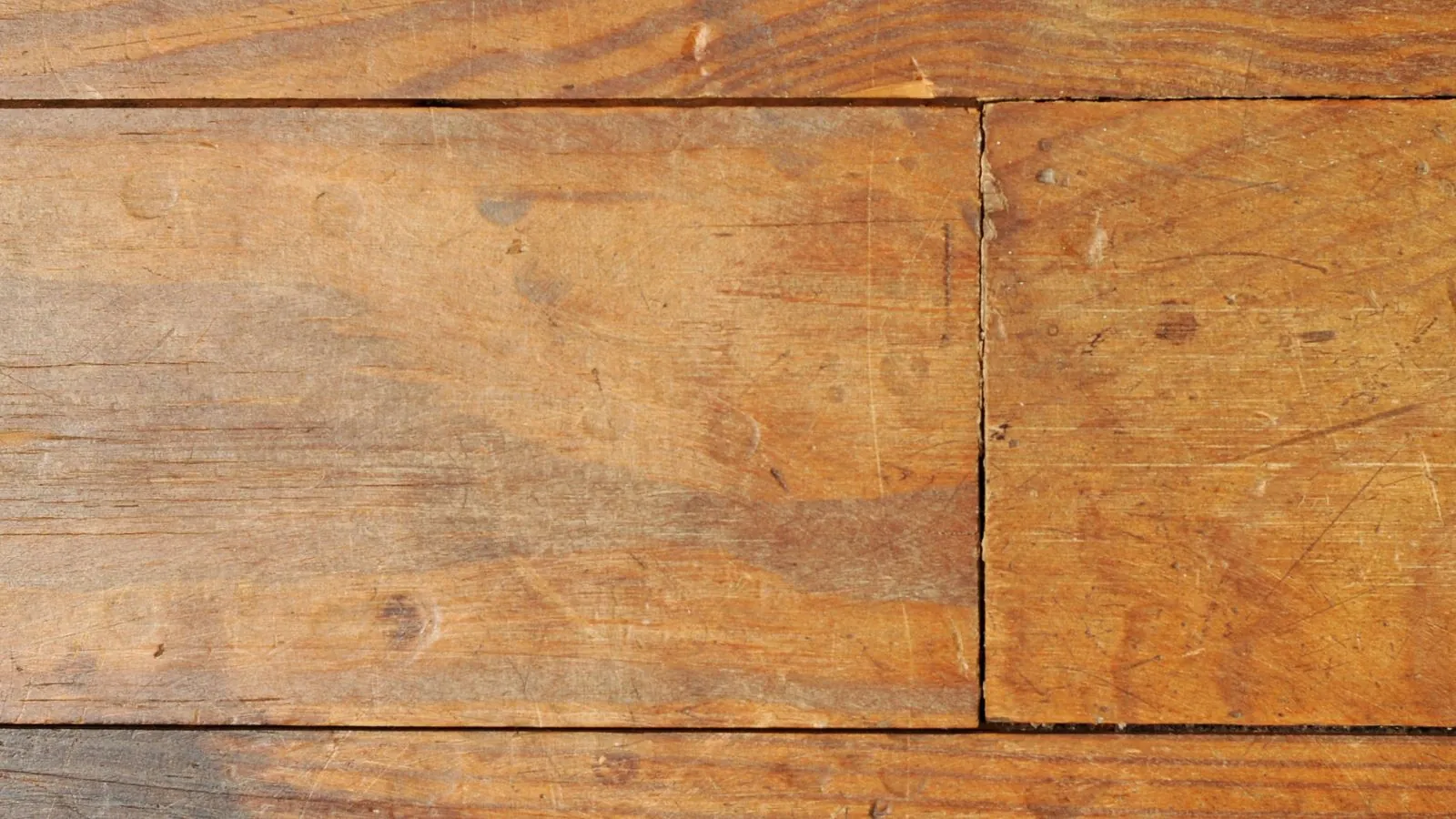
What water does to hardwood floors over the first few days
Hardwood floor water damage repair starts with understanding how wood reacts. Boards soak up water from below and from the edges, then swell, and the swelling pushes against the neighboring boards. Cupping, where edges rise higher than the center, often shows up within days, and buckling can follow.
Wood that is dried quickly often flattens again. Wood that stays wet can crack, stain black or grow mold under the finish. If you see water on a hardwood floor, wipe it up and call before the boards begin to move.
- Cupping, where board edges rise and the center dips.
- Crowning, where the center rises after the floor was sanded while wet.
- Buckling, where boards lift off the subfloor.
- Dark gray or black staining from long-term moisture.
- Gaps between boards after drying, or boards that stay swollen.
- A sour, musty smell from under the floor.
Why hardwood is at risk in Duxbury homes
Duxbury has many older homes with original pine or oak flooring, some over crawl spaces and cellars. Moisture rises from those spaces in humid summers and after storms, even without a visible leak. Wood that has absorbed it can look fine, then cup after a few warm, damp weeks.
Homes near the bay can see added humidity that makes drying slower. Our crawl space page explains how moisture below the floor gets in. Often the floor is a symptom of a wet space beneath it.
How we dry a hardwood floor
We start with moisture meters on the boards and the subfloor, and a thermal camera to find wet areas. Standing water is extracted, and then drying begins. Drying mats and injection systems pull moisture out through the boards, often with a dehumidifier running in the room.
Drying a hardwood floor is slow on purpose. Forcing it too fast can crack the boards. We monitor the moisture content daily and adjust the equipment, and we wait for the wood to settle before judging what needs repair.
Need hardwood floor water damage help now?
Call dispatch. We answer 24/7 and start with safe next steps.
Repair or replace: how the decision is made
| Condition | Likely outcome | Notes |
|---|---|---|
| Slight cupping, dried quickly | Flattens, may need light sanding | Wait until moisture is stable before refinishing. |
| Buckled boards | Replace affected boards | Check the subfloor for rot. |
| Dark staining and mold | Replace the affected area | Treat the subfloor before new boards go in. |
| Widespread damage over several rooms | Replace the floor | Blending new and old boards takes care. |
Sanding and refinishing come only after the wood is dry. A floor refinished too early traps moisture and can fail again. We tell you honestly when a floor can be saved and when replacement is the better value.
Mistakes that make hardwood water damage worse
- Sanding or refinishing the floor before it is fully dry.
- Covering wet boards with rugs, plastic or furniture.
- Using a heat gun or high heat to dry the floor, which can crack boards.
- Leaving a wet area rug on the floor overnight.
- Ignoring a floor that cups after a leak because it looks mostly flat.
Wood needs gentle, controlled drying and time. A few days of patience can save a floor that would otherwise need replacing. We take readings until the moisture content settles.
What affects hardwood floor water damage costs
Price follows the area of wet flooring, how long the water sat, the species and finish and whether the subfloor is wet too. Matching an old floor is harder than installing a new one. We explain scope and price before work starts.
Insurers often cover hardwood damage from a sudden leak and may cover replacement or repair. Damage from slow seepage or humidity is often excluded. Check your policy and ask your insurer, and take photos before the floor is touched.
If your floor was wet by a leak in the kitchen, see kitchen water damage restoration. For the drying equipment used under and across floors, see structural drying.
Larger bayside homes with finished interiors are covered on the Powder Point page.
Safety steps while you wait
- Keep furniture and foot traffic off the wet floor.
- Lift rugs and small items so they do not stain the surface.
- Do not use heat guns or high heat to dry boards.
- Photograph the damage before moving anything.
We refer to ANSI/IICRC S500, the published restoration standard, when we judge whether a floor can be dried or must be replaced.
Hardwood Floor Water Damage questions in Duxbury
Can a water-damaged hardwood floor be saved?
Often, if it is dried quickly and the boards are not buckled or stained dark. Moisture readings over a few days show whether it will settle.
How long should I wait before refinishing?
Until the moisture content is stable and matches a dry reference. Refinishing early can trap moisture and cause failure.
Why did my floor cup a week after the leak?
Wood absorbs water gradually and swells as it does. Cupping can show days after the leak, as the boards equalize.
Can you match my existing floor if boards must be replaced?
We try. Species, stain and age all matter. We tell you what is possible before work begins.
Does insurance pay for hardwood floor water damage?
Often for sudden leaks, less often for slow ones. Check your policy and ask your insurer.