
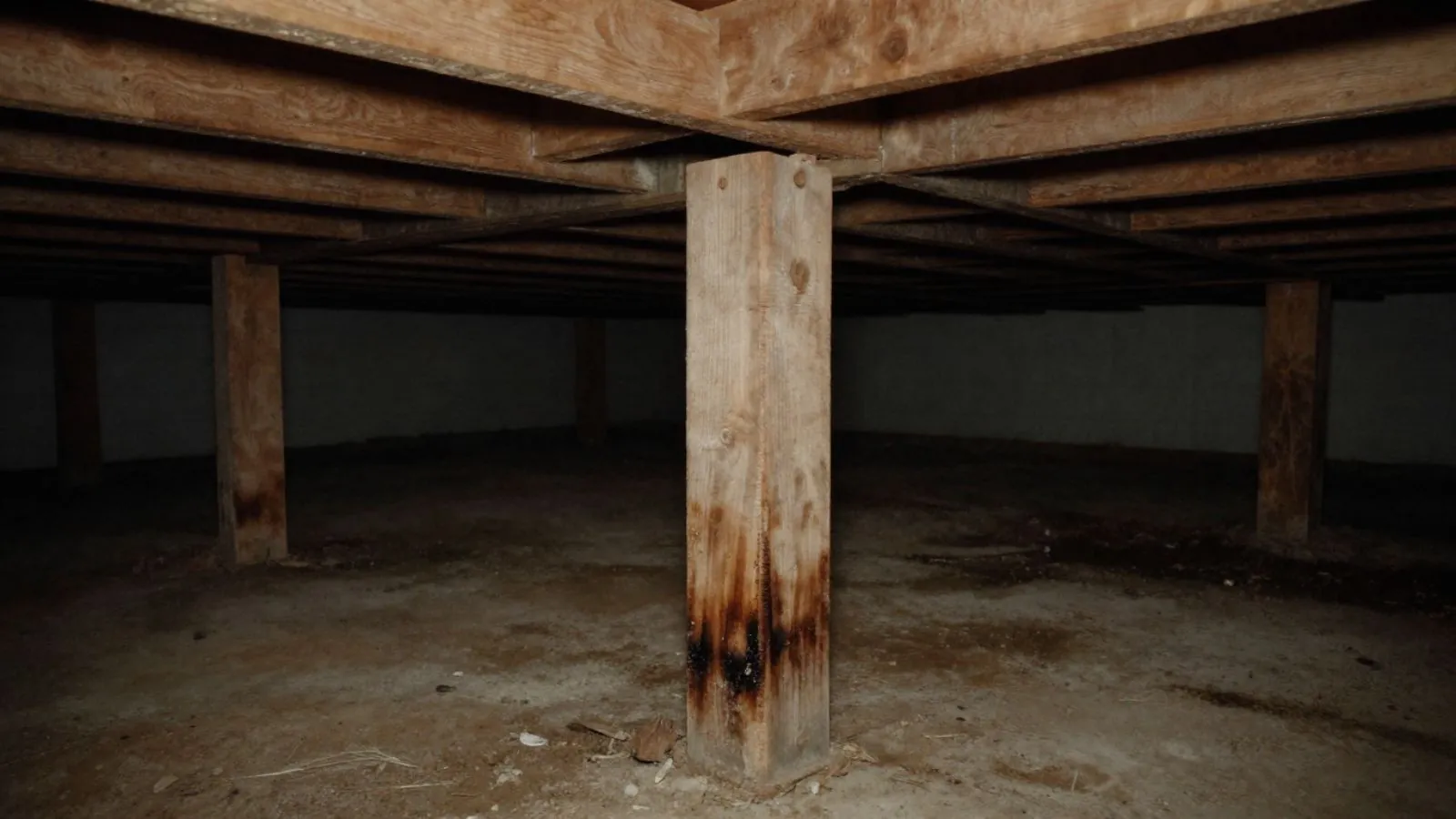
Crawl space water damage and why it goes unnoticed
A crawl space is the shallow area between the ground and the first floor, and it is easy to ignore. Water can sit there for weeks, rotting joists and insulation and sending moisture up into the house. If you notice a musty smell, cold floors or sagging insulation, have it checked.
Crawl spaces have tight access and sometimes exposed wiring and ductwork. Do not enter if there is standing water near electrical equipment. Call us and we will explain how we assess the space safely.
Why crawl spaces get wet in Duxbury
Duxbury's water table is often close to the surface. Water enters through vents, foundation walls and the earthen floor, and it collects in low spots. Spring melt, heavy rain and high tides raise the table, and a crawl space without a vapor barrier takes up the moisture.
Many older Duxbury homes have crawl spaces under additions or the original house. Air can carry humid summer air in through vents and condense on cool surfaces. That damp air is a common source of moisture even without standing water. Our basement page covers deeper foundation spaces.
Signs of crawl space water trouble
- A musty smell in the house, strongest near the floor.
- Cold, damp or spongy floors above the crawl space.
- Wet, sagging or moldy insulation between the joists.
- Standing water or dark staining on the ground and piers.
- Rust on ducts, nails and fasteners.
- Wood rot, fungus or pests under the house.
Need crawl space water damage help now?
Call dispatch. We answer 24/7 and start with safe next steps.
How we dry and protect a crawl space
We inspect with a flashlight, moisture meter and a thermal camera, photographing everything. Standing water is pumped out, and wet insulation is bagged and removed. Wood moisture readings tell us whether joists and subfloor are dry or need more time.
Air movers and dehumidifiers go in through the access, sometimes with ducting to reach tight areas. In long-wet spaces we check for mold and recommend treatment where growth is found. Closing vents and adding a vapor barrier can prevent a repeat, but those are decisions for you and your contractor.
| Condition | Response | Follow-up |
|---|---|---|
| Standing water | Pump out and find the source | Fix drainage or the leak. |
| Wet insulation | Remove and dry framing | Replace insulation after drying. |
| Damp air, no standing water | Dehumidify and monitor | Consider a vapor barrier and venting changes. |
| Visible mold on wood | Treat and dry | See mold remediation. |
What a crawl space inspection covers
An inspection looks at the water, the structure and the air. We start at the access, check for standing water and then work along the joists. Photographs of each area give you a record of conditions.
- Standing water, wet soil and drainage direction.
- Wood moisture content in joists, sill plates and subfloor.
- Insulation condition and any sagging or staining.
- Pipes, ducts and wiring for leaks, corrosion and damage.
- Vents, vapor barrier and signs of pests or rot.
What affects crawl space cleanup costs
Price depends on how much water there is, how hard the space is to reach, how much insulation must be removed and whether mold is present. Tight access means more labor per square foot. We explain scope and price before work starts.
Insurance often excludes crawl space moisture from groundwater or long-term humidity, though a sudden plumbing failure can be covered. Check your policy and ask your insurer. Keep photos and any inspection reports.
If the moisture came from a plumbing problem, start with burst pipe damage. For what happens once water has reached the floors, see our hardwood floor repair page.
Older shoreline houses are covered on the page for Standish Shore, including what a damp crawl space can look like.
Safety steps while you wait
- Stay out of flooded rooms until the power is off.
- Treat floodwater as contaminated and avoid contact.
- Do not walk on a sagging ceiling or soft floor.
- Photograph the damage and the water line before cleanup.
Water from outside is classed by contamination level in ANSI/IICRC S500, the published standard we refer to for these jobs.
Crawl Space Water Damage questions in Duxbury
How can I tell if my crawl space has a moisture problem?
Look for a musty smell, soft floors, wet insulation and standing water. A moisture meter and an inspection give a clear answer.
Is it safe to go into a wet crawl space?
Not if water is near wiring or equipment, or if you are unsure of the air quality. Call us and we will explain how the space is assessed.
Do you handle crawl space emergencies in Duxbury?
If water is actively rising or a pipe has burst, call any time. Dispatch is open around the clock.
Will drying a crawl space stop mold?
It helps by removing the moisture that mold needs. If growth is already present, it may need treatment or removal as well.
Does insurance cover crawl space water damage?
Sudden plumbing failures may be covered, while groundwater and long-term humidity often are not. Check your policy and ask your insurer.