
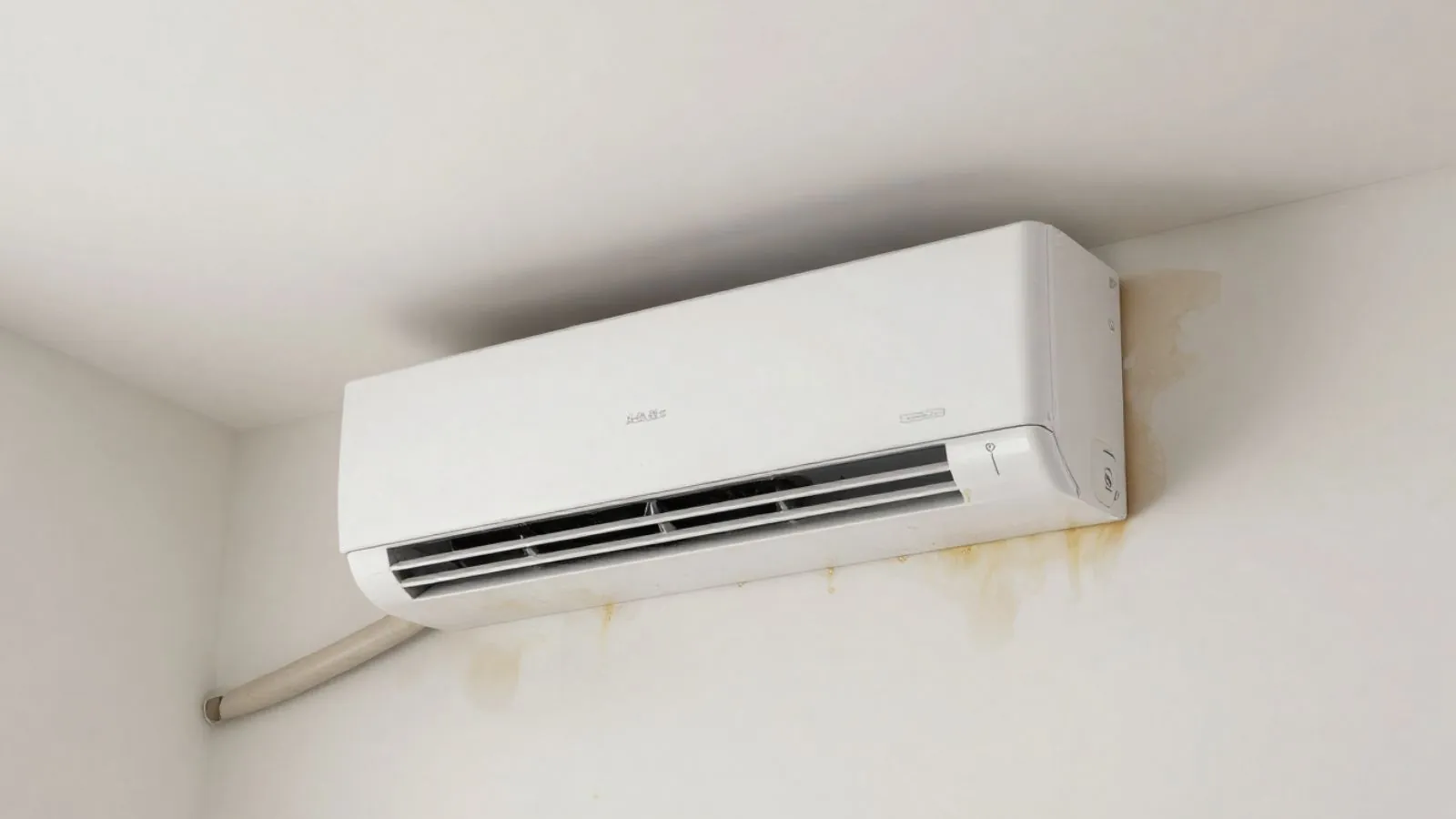
Why an air conditioner leaks water into your house
An air conditioner pulls moisture out of the air, and that water is meant to leave through a drain line. When the line clogs, the pan overflows or the coil freezes and thaws, water ends up inside the house. If you see a stain below an air handler or water around an indoor unit, turn off the system and call.
Air conditioner leaks are usually slow, which is why the damage is often found late. A ceiling can hold weeks of drips before it sags. Because the water is condensate rather than supply water, it can carry dust and growth from the drain pan.
Common causes of an AC leak
- A clogged condensate drain line, often from algae or debris.
- A cracked or rusted drain pan under an attic or closet air handler.
- A frozen evaporator coil that thaws and overflows the pan.
- A disconnected or poorly sloped drain line.
- A failed float switch that did not shut the system off.
Where AC leaks cause trouble in Duxbury
Duxbury summers bring humid days off the bay, so air conditioners work hard from June into September. Many homes have the air handler in an attic or a second-floor closet, and the ceiling below becomes the first casualty. A drip that starts quietly can saturate insulation and drywall long before anyone notices.
Insulation holds water against framing and keeps the area damp. That is a setup for mold if the leak runs a while. If you see a brown ring on a ceiling, see our ceiling water damage page for how the repair works.
Need ac leak water damage help now?
Call dispatch. We answer 24/7 and start with safe next steps.
How we find and dry the damage
We trace the leak from the stain back to the air handler or drain line, checking moisture in the ceiling, the wall base and the insulation above. A thermal camera is useful here, since wet insulation reads cooler than dry. We open only what we need to.
Wet insulation is removed, and damaged drywall is cut out in clean lines. Air movers and a dehumidifier dry the framing. The system itself should be serviced by a qualified HVAC technician before it runs again, so the leak does not return.
| Situation | Our response | Next step |
|---|---|---|
| Small stain, dry to the touch | Moisture check and monitoring | HVAC tech clears the drain line. |
| Sagging or wet ceiling drywall | Open, dry and replace the section | Patch, prime and paint. |
| Wet attic insulation | Remove and dry framing | Replace insulation after drying. |
| Musty smell near the unit | Check for hidden growth | Testing or mold remediation if found. |
Maintenance steps that keep condensate flowing
Most AC leaks trace back to a clogged drain line. A technician can flush it during an annual tune-up. A few homeowner habits help between visits.
- Change or clean air filters on the schedule in your manual.
- Pour a cup of white vinegar into the condensate access port as your technician advises.
- Look at the drain pan under an attic or closet unit each spring.
- Install a float switch that shuts the system off if the pan fills.
- Have the line checked if you see water near the unit or a stain below it.
If your air handler is in the attic, the ceiling below is the place to check first. A small stain or a damp spot after a hot week is an early warning, and catching it early keeps the repair to a patch instead of a section.
Cost factors for AC leak water damage
The price depends on how long the unit leaked, how much insulation and drywall are wet and whether the ceiling must be rebuilt. A small stain caught early is a short repair. We explain scope and price before work starts.
Insurance for an air conditioner leak depends on whether the failure was sudden or gradual. Policies often exclude damage from slow leaks or lack of maintenance, though a sudden overflow may be covered. Check your policy and ask your insurer, and keep your HVAC service records.
If a ceiling stain has been there for a while, ask about mold remediation. For a leak that started in the attic roofline instead of the unit, our ceiling and roof leak guide separates the two causes.
Safety steps while you wait
- Unplug the appliance only if the cord and outlet are dry.
- Close the supply valve behind or under the unit.
- Do not use a household vacuum on standing water.
- Photograph the damage and keep the failed hose or part.
We refer to ANSI/IICRC S500, the published restoration standard, when we set drying goals for floors and cabinets.
AC Leak Water Damage questions in Duxbury
Do you handle AC leak water damage emergencies in Duxbury?
If the leak is active, call any time. Dispatch is open around the clock, and we will tell you how to limit the damage until a crew arrives.
Should I keep running the air conditioner if it is leaking?
No. Turn the system off at the thermostat and the breaker, then clear any water you can reach and call.
Can you fix the air conditioner?
No. A qualified HVAC technician fixes the unit and clears the drain. We dry and repair the damage the water caused.
Why is my AC leak smelling musty?
Standing condensate and wet insulation can grow mold or bacteria. Moisture checks show how far the dampness extends.
Does homeowners insurance cover AC leak damage?
It can, if the leak was sudden. Slow leaks and maintenance failures are often excluded. Check your policy and ask your insurer.