
The smell is a symptom
A musty or earthy odor after a leak or flood usually points to moisture trapped in a material. Air fresheners cover the smell and do nothing about the cause. The fix is to find what is wet and dry or remove it.
The smell can show up days or weeks after the event, especially when the room is closed or humid. It can also return after you clean if the moisture source is still active.
Common hidden sources
Wet insulation
Insulation inside a wall or ceiling can hold water for weeks. It dries slowly and often needs removal.
Carpet pad
Padding under carpet acts like a sponge. Wet pad often has to be replaced even if the carpet dries.
Subfloor and framing
Wood under the finish can hold moisture, especially under tile, vinyl or hardwood.
Behind baseboards
Water wicks up into walls at the base. Baseboards and the bottom of drywall stay damp.
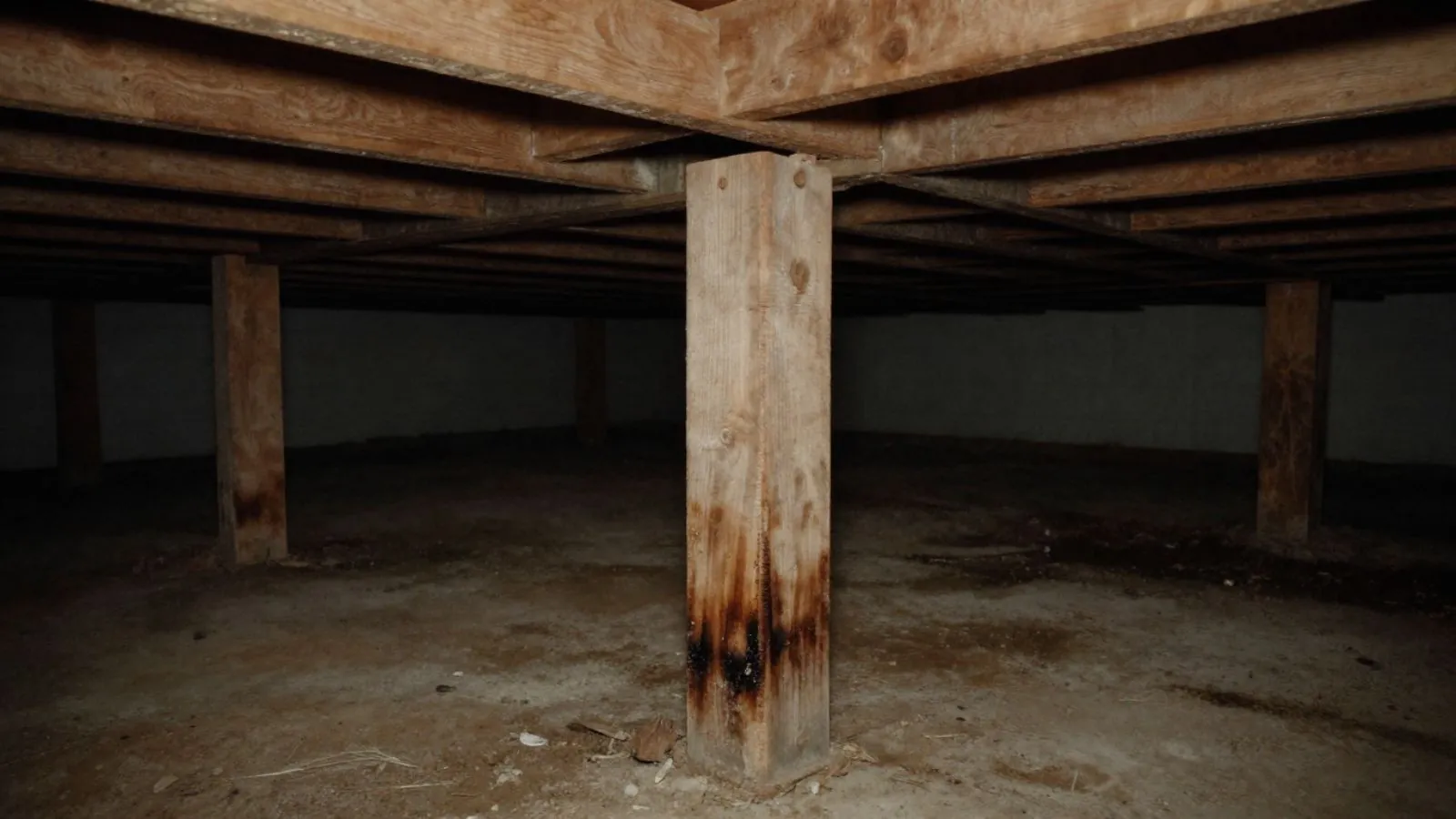
Crawl spaces and basements
Dirt floors, standing water and poor ventilation keep the air humid.
HVAC and ducts
Water in ductwork or a drain pan can spread smell through the house.
Each of these needs a different fix. Some can be dried in place with structural drying, and others have to be cut out. Moisture readings tell you which is which.
How to track the smell
- Notice where the smell is strongest and at what time of day.
- Check for stains, bubbling paint and soft spots on walls and ceilings.
- Look under sinks and behind appliances for damp cabinets.
- Feel baseboards and carpet edges for cold, damp spots.
- Run a dehumidifier and watch the humidity level over a day or two.
- Call a professional if the smell remains or the damp area grows.
A moisture meter and a thermal camera find wet materials that you cannot see or feel. We use both before we decide what to open.
What helps and what does not
| Fix | Helps? | Note |
|---|---|---|
| Air freshener or candle | No | Masks the odor only. |
| Opening windows in dry weather | Sometimes | Helps if the cause is humidity. |
| Dehumidifier | Often | Works for humid air and damp materials near the surface. |
| Cleaning surfaces | Sometimes | Only helps if the source is dry. |
| Removing wet pad or insulation | Often | Needed when materials are saturated. |
| Fixing the leak | Required | Nothing lasts without it. |
If the smell comes with visible growth, read about our mold remediation process. If you have health concerns about air quality in your home, talk to your doctor.
Have water damage right now?
Skip the reading and call. Dispatch answers 24/7.
Humidity targets and simple monitoring
A hygrometer, available at a hardware store, shows relative humidity. Many guides suggest keeping indoor humidity roughly between 30 and 50 percent. Readings above that for days at a time suggest that your home needs more drying or ventilation.
- Check humidity in the basement, bathrooms and bedrooms.
- Run exhaust fans during and after showers and cooking.
- Use a dehumidifier in damp areas and empty it regularly.
- Keep furniture a few inches from exterior walls.
- Check humidity again after a few days to see if your changes worked.
When the smell is not about water
Not every odor is moisture. Pet accidents, old smoke, stored items and dirty HVAC filters can cause smells that seem musty. If you cannot find any dampness with a meter, consider cleaning, replacing filters and airing out stored items.
If the smell appeared right after a leak, though, assume moisture first. The timing is often the best clue.
What a professional visit looks like
A visit starts with questions. When did the leak happen, what was dried, and where is the smell strongest. We then walk the house with a moisture meter, checking walls, floors and ceilings in a grid so nothing is missed.
A thermal camera shows temperature differences that can point to wet insulation or a leaking line. We confirm what the camera suggests with the meter before anything is opened. That keeps demolition small and targeted.
After the visit you should receive a short written summary. It should name the wet areas, the likely source and the recommended steps, such as drying in place, removing a section or fixing a line first.
Drying methods that clear smells for good
- Air movers push air across wet surfaces to speed evaporation.
- Dehumidifiers pull moisture out of the air so it does not settle elsewhere.
- Injection drying forces dry air into wall cavities without removing the wall.
- Removal of saturated pad, insulation or drywall when drying would take too long.
- Cleaning of surfaces after drying, followed by a final moisture check.
Odor control comes last, after the moisture is gone. Deodorizing before drying only hides the problem for a short time. A good job ends with readings that show the building materials are dry and a smell that fades on its own.
How to keep the smell from coming back
Keep humidity in check and fix small leaks promptly. Check the places that failed before, such as the base of a wall or the corner of a basement. If the smell returns, it is a sign that moisture is back and the source needs another look.
Duxbury homes, age and humidity
The John Alden House in Duxbury was built in 1653, and the town has many older buildings. Older houses often have crawl spaces, stone foundations and original framing that hold moisture differently from newer construction.
The town's climate vulnerability assessment describes routine coastal flooding at lunar high tide. Homes near the bay or marsh can carry higher humidity in low areas, so ventilation and a dehumidifier help in damp months.
The same advice applies in Bryantville and Monponsett, where older homes and nearby water can keep lower levels damp. The key is to find the wet material.
Duxbury questions answered
How long should a musty smell last after drying?
It should fade as materials dry. If it persists after several days of drying, something is probably still wet.
Is a musty smell always mold?
Not always. It can come from damp materials, bacteria or humidity, but it is a sign of moisture that deserves attention.
Can older Duxbury homes smell musty more often?
Older homes with crawl spaces and stone foundations can hold moisture, so ventilation and drainage matter.
Do I need to open walls to find the source?
Not always. Moisture meters and thermal cameras show what is wet first, and we open only where readings point.