
Three words, three stages
People use restoration, remediation and mitigation almost interchangeably, but contractors often use them for different stages of the same job. Mitigation stops the damage from growing. Remediation removes or neutralizes a hazard. Restoration puts the building back to its prior condition.
No law makes these definitions universal, so always ask a company what it means by each word in its own scope. The labels matter less than the list of tasks behind them.
How the stages compare
| Term | Main goal | Typical tasks |
|---|---|---|
| Mitigation | Stop further damage | Shut off water, extract standing water, tarp openings, set drying equipment. |
| Remediation | Remove or treat a hazard | Remove contaminated or moldy material, clean, disinfect, contain. |
| Restoration | Return the structure to its prior state | Replace drywall, flooring and trim, repair, paint, reinstall. |
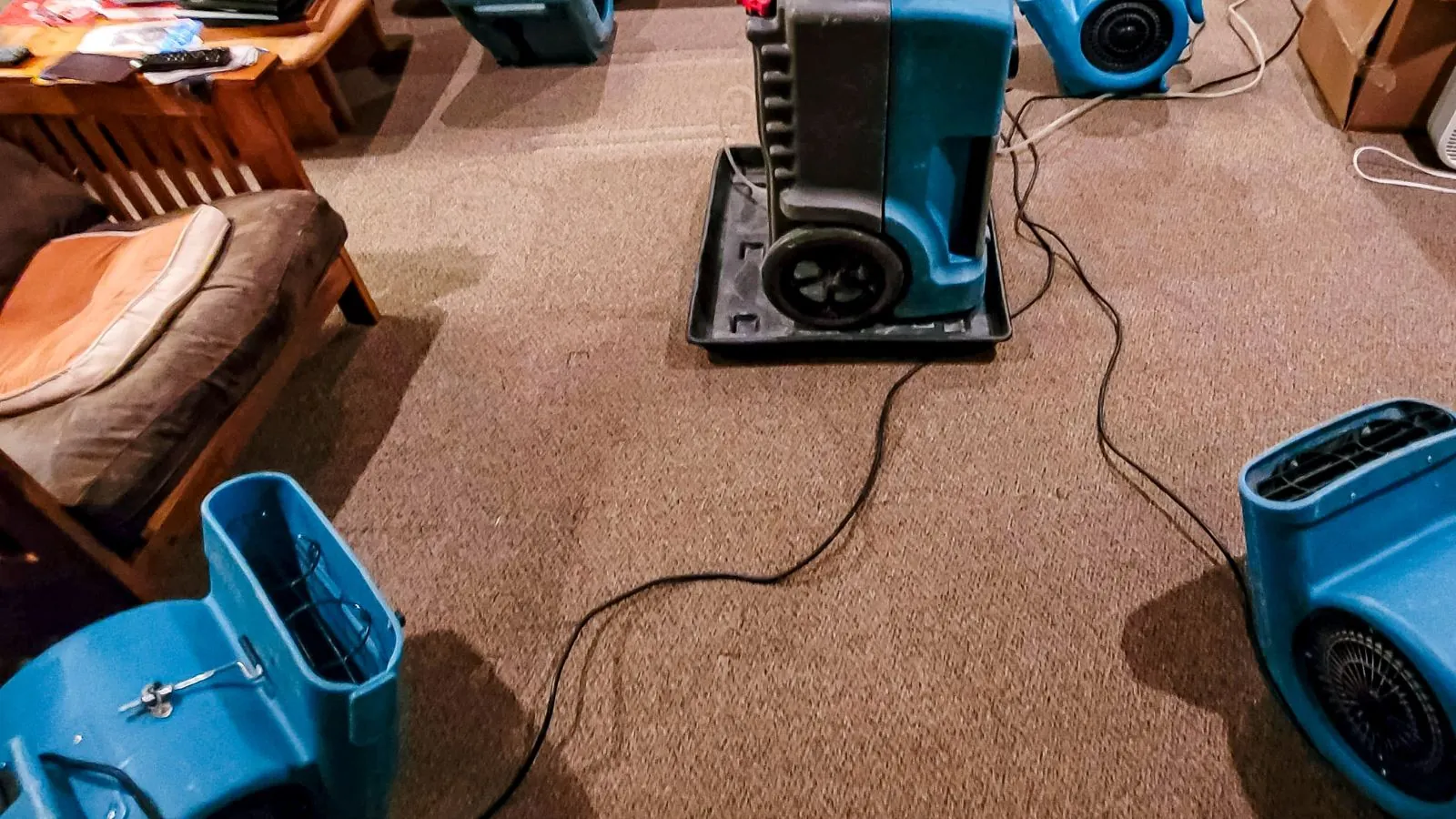
Many jobs move through all three. A burst pipe starts with mitigation, may need remediation if mold or contamination is found and ends with restoration. Our water extraction and structural drying work is mitigation, and the rebuild after is restoration.
Why the word choice matters to you
If a company quotes only one stage, you may find out later that the rest costs extra or needs another contractor. Ask whether the scope covers drying, removal of damaged material and the rebuild, and who is responsible for each. A single clear scope is easier to compare than three separate invoices.
Your insurer may also treat the stages differently. Emergency mitigation is often handled quickly, while rebuild scopes go through an adjuster. Ask your insurer how they approve each stage.
When remediation becomes the main job
Remediation is the primary task when the problem is contamination or mold rather than clean water. Sewage and floodwater are contaminated and require protective removal and disinfection. Mold is addressed by containing the area, removing affected material and fixing the moisture source.
- Clean water from a supply line: mitigation first, then restoration.
- Sewage or floodwater: mitigation, remediation and restoration.
- Mold after a slow leak: moisture control, remediation and restoration.
- Fire and water together: coordinated work with other trades.
For contaminated losses, see how we handle sewage backup cleanup, and for growth, read about our mold remediation approach. In both cases, fixing the water source comes before any cleaning.
Have water damage right now?
Skip the reading and call. Dispatch answers 24/7.
Standards you may hear about
The industry refers to published standards, including ANSI/IICRC S500 for water damage restoration and ANSI/IICRC S520 for mold remediation. They describe categories of water and classes of loss, and they guide how work is done. You can ask a company which standards its scope references.
Questions to ask before you hire
- What stages does your scope cover, and what is left to someone else?
- Who documents moisture readings and when?
- What is removed and what is dried in place?
- Who handles the rebuild, and is it priced separately?
- What happens if you find more damage after opening a wall?
Water categories and classes, in plain language
The industry sorts water by how contaminated it is. Category 1 is clean water, such as from a supply line. Category 2 carries some contamination, like water from a washing machine. Category 3 is grossly contaminated, such as sewage or floodwater.
| Category | Description | Typical handling |
|---|---|---|
| Category 1 | Clean source, like a broken supply line | Extract and dry, with a quick response. |
| Category 2 | Some contamination, like an appliance discharge | Extract, clean and dry, and remove porous materials. |
| Category 3 | Grossly contaminated, like sewage or floodwater | Protective gear, removal of porous materials and disinfection. |
Clean water can become more contaminated the longer it sits. That is why speed matters. A Category 1 loss left for days may need Category 2 treatment.
Classes of loss: how much water and how much material
Classes describe how fast water will evaporate based on what is wet. A Class 1 loss involves a small area and low-porosity materials. A Class 4 loss involves deeply held moisture in dense materials like hardwood or concrete.
The class guides how much drying equipment is needed and for how long. Ask your company which class and category it assigned, and why. The answer shows whether they measured or guessed.
A worked example from leak to finished repair
Suppose a washing machine hose fails on the second floor and water runs through to the kitchen ceiling below. Mitigation shuts off the supply, extracts water and sets drying equipment on both floors. Wet ceiling drywall may be cut out.
If the water sat for days, the crew might find growth in the wall cavity. Remediation then contains the area, removes the affected material and cleans the framing. Restoration finishes the job with new drywall, paint and trim.
Each stage has its own tasks and its own records. A good company explains which stage you are in and what comes next.
A Duxbury note on sewer and septic systems
A Duxbury town job posting describes shared septic and sewer systems that include lift stations and grinder pumps. A backup in a home on one of those systems is a contamination event, so it is remediation work and not simple extraction.
The Census Bureau's 2020-2024 estimates list a median home value of $874,600 in Duxbury. At that value, rebuild work is usually the largest part of a bill, so ask for it to be itemized apart from mitigation.
If you live in Kingston or Bryantville, the same stages apply. The call is the same too: describe what you see and we will tell you which stage you are in.
Duxbury questions answered
Is mitigation the same as water extraction?
Extraction is a major part of mitigation. Mitigation also includes stopping the source, protecting contents and setting drying equipment.
Does a septic backup in Duxbury count as remediation?
Yes. A backup is contaminated, so it needs protective removal and disinfection. Keep people and pets away and call a professional.
Do I need separate companies for each stage?
Not necessarily. Some companies handle all three, and others coordinate trades. Ask for one written scope that shows who does what.
Which stage does my insurer usually pay for first?
Emergency mitigation is often approved quickly because it limits further damage. Ask your insurer how they handle each stage, since it depends on your policy.