
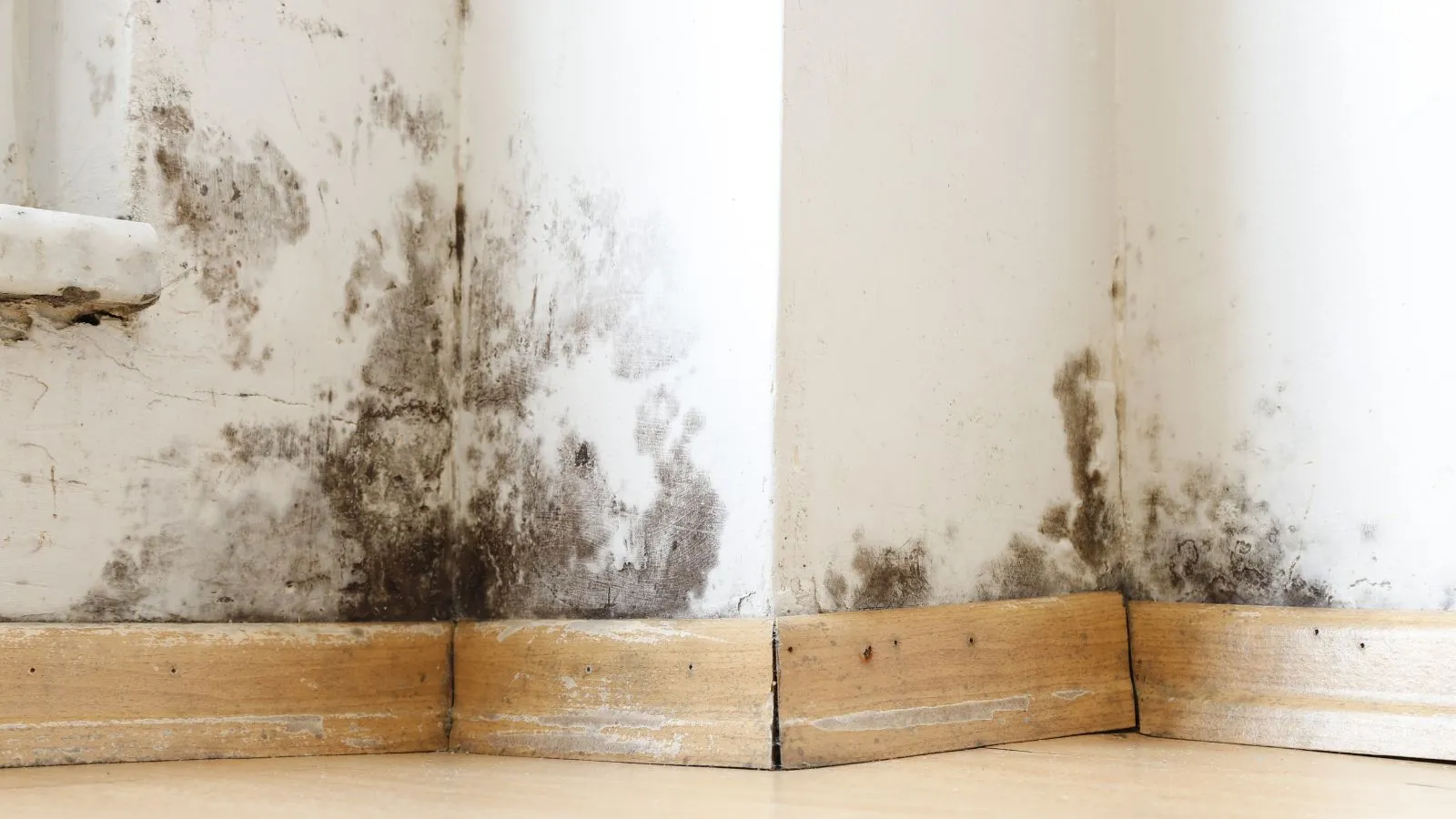
Mold in plain terms
Mold is a fungus that spreads by releasing tiny spores into the air. Spores are everywhere outdoors and indoors, and they stay dormant until they land on a damp surface with something to feed on. Wood, drywall, paper, fabric and dust all qualify.
That means the real question is not whether spores are present, because they usually are. The question is whether your home has moisture that lasts long enough for them to grow.
What mold needs to grow
- Moisture from a leak, flood, condensation or high humidity.
- A food source such as drywall paper, wood, insulation or carpet backing.
- Time, since growth often starts after materials stay wet for a day or two.
- Moderate temperatures, which most homes provide.
Remove any one of these and growth slows or stops. Moisture is the one you can most easily control, which is why we talk about structural drying so often when we talk about mold.
How to recognize mold in your home
Mold can look fuzzy, slimy or powdery, and its color ranges from white and green to black. Do not rely on color to identify it, because many substances look alike and colors vary. A musty smell in a room that has been wet is another common clue.
| Location | Usual moisture source | Where to look |
|---|---|---|
| Bathroom ceiling | Steam and poor ventilation | Corners and around the fan. |
| Basement walls | Seepage or condensation | Base of walls and behind stored items. |
| Under a sink | Slow supply or trap leak | Cabinet floor and back panel. |
| Around windows | Condensation or flashing leaks | Sills and lower corners. |
| Attic roof deck | Roof leak or poor ventilation | Underside of the sheathing. |
| Behind a wall | Hidden pipe or exterior leak | Stains, bubbling paint, soft drywall. |
Water first, then mold
Because mold follows water, a mold problem is almost always a water problem. Finding the source comes first, whether it is a leaking pipe, a roof opening or a damp crawl space. Cleaning mold without fixing the source usually means it comes back.
If a recent leak is the cause, start with the water. Our water extraction and drying work removes the moisture, and then we look at what has to be cleaned or removed.
Have water damage right now?
Skip the reading and call. Dispatch answers 24/7.
When testing or an inspection makes sense
An inspection looks for moisture, damaged materials and visible growth. Sampling can add information, but it does not replace finding the source, and results need interpretation. A professional can explain whether testing is likely to change what you do.
Sometimes a buyer, lender or insurer asks for documentation. Ask them what they require before you pay for testing, and do not assume any result will satisfy them.
What not to do
- Do not paint over a stain or musty wall without finding the water.
- Do not spray bleach on porous material and call it fixed.
- Do not disturb a large area dry, because dust spreads spores to other rooms.
- Do not wait weeks to dry a wet room.
If someone in your home has health concerns they associate with indoor air, talk to a doctor. We do not make health claims about mold, and we focus on moisture and materials.
Humidity, temperature and how fast moisture becomes a problem
Mold does not need a flood. Persistent high indoor humidity can supply enough moisture on cool surfaces like windows, exterior walls and basement slabs. Condensation is the most common version, and it builds up where warm, moist air meets a cold surface.
Many guides suggest keeping indoor relative humidity roughly between 30 and 50 percent. A simple hygrometer costs little and tells you where you stand. If the number stays high, a dehumidifier and better ventilation usually help.
Why speed matters after a leak
| Time since the leak | What is usually happening | What to do |
|---|---|---|
| First hours | Water spreads and soaks porous materials | Stop the source and extract standing water. |
| One to two days | Materials stay wet and growth can begin | Start drying equipment and take moisture readings. |
| Several days | Growth may be visible on wet porous surfaces | Remove materials that cannot be dried. |
| Weeks | Growth spreads and odors develop | Contain, remove and fix the moisture source. |
Treat the table as a rule of thumb. Cool, dry conditions slow growth and warm, humid conditions speed it up. The safest approach is to treat any wet building material as urgent and dry it right away.
Where water damage and mold meet
Most indoor mold problems we see start with a water event that was not fully dried. A pipe leak behind a wall, a roof leak above a ceiling or a flooded basement that dried only on the surface can all leave moisture trapped. When that moisture sits long enough, growth follows.
That link is why water control is always the first step. Without it, cleaning and removal are temporary. With it, the rest of the job has a chance of lasting.
Why Duxbury's coastal setting matters for moisture
The town's climate vulnerability assessment describes routine coastal flooding at lunar high tide. Low areas close to the bay and marsh can stay damp longer, so crawl spaces and basements there need extra attention to drainage and ventilation.
CBS Boston reported that the 2018 nor'easters damaged a seawall in Duxbury. Storms that push water against the coast can also push moisture against foundations, and wet building materials after a storm should be dried promptly.
The same principles hold in Bryantville and Kingston, where older homes and nearby brooks and ponds add their own moisture. In every case, control the water and the mold has little to feed on.
Duxbury questions answered
Is all mold in a house a problem?
Spores are normally present in indoor air, so their presence alone is not unusual. Visible growth or a persistent musty smell points to a moisture problem that deserves attention.
How fast can mold grow after a leak?
Growth can start within a day or two on materials that stay wet. The exact timing depends on the material, temperature and humidity, which is why quick drying matters.
Do Duxbury homes near the bay get more mold?
Damp crawl spaces and basements can be more common near water, and the town's assessment describes routine coastal flooding. Ventilation and drainage make a big difference.
Do I need clearance testing after remediation if I am selling?
A buyer, lender or agent may ask for documentation. Ask them what they require. We do not promise what any lender will accept.