
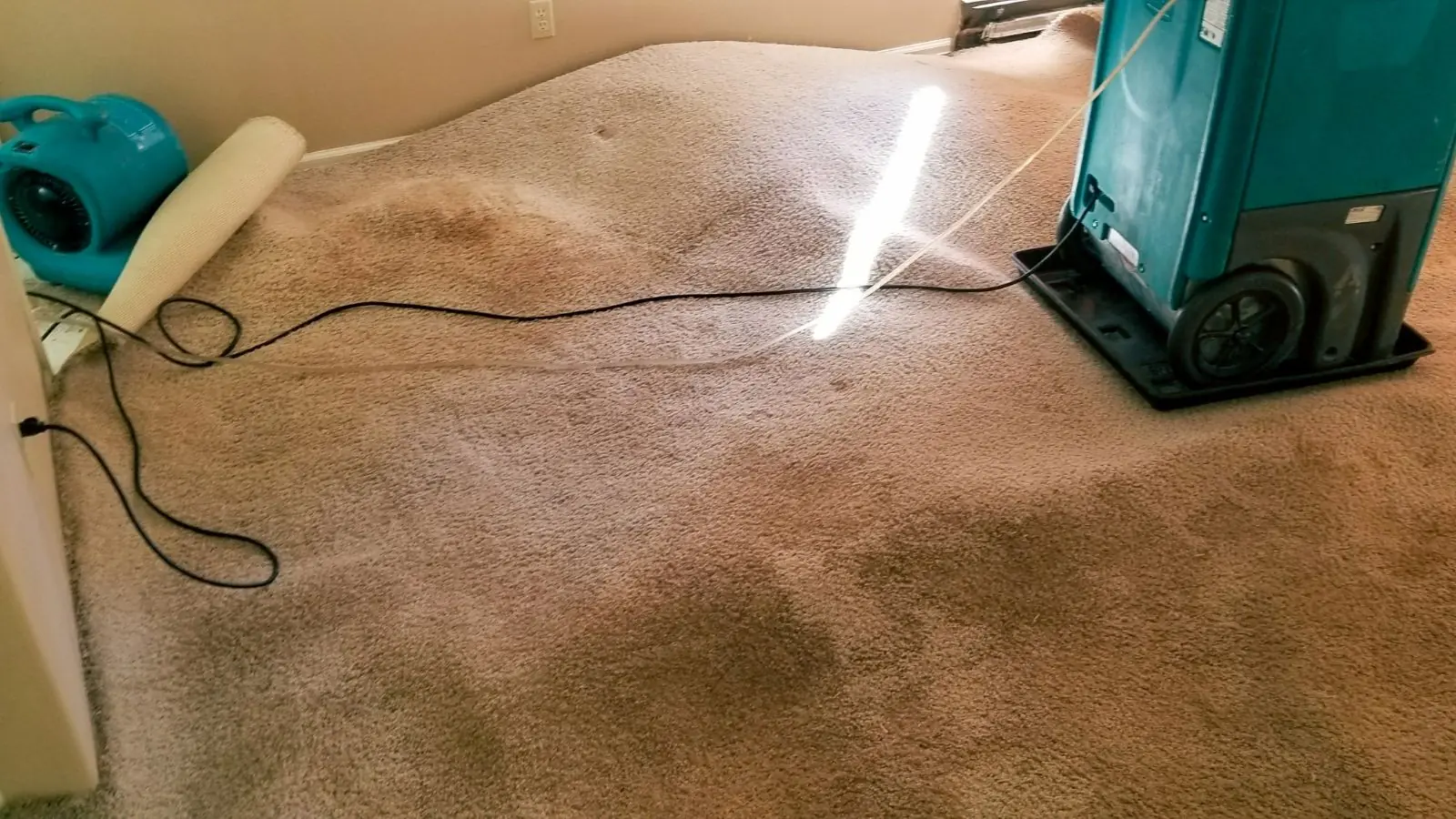
Carpet water damage restoration: what makes wet carpet risky
Carpet water damage restoration depends on one question: what water did the carpet touch. Clean supply water, such as from a pipe or a washing machine hose, often lets carpet be dried in place. Contaminated water from outside, a drain or a sewer means replacement.
The pad under the carpet is the weak point. It soaks up water like a sponge and holds it against the subfloor for days. Even if the carpet surface looks dry, the pad and tack strip can keep moisture in place.
Clean water, gray water or black water
Clean water
Water from a supply line or a clean source. Carpet is usually saved if it is extracted and dried within a day or two.
Gray water
Water with some contamination, such as washing machine discharge. Carpet may be cleaned and dried, or replaced if it sat.
Black water
Sewage or floodwater from outside. Carpet and pad are removed and replaced.
Old or long-wet carpet
Carpet wet for several days is often replaced, because mold and odor take hold.
The published ANSI/IICRC S500 standard describes these water categories and how materials respond. We use them to explain our recommendation instead of leaving you to guess.
How carpet gets wet in Duxbury homes
Basements and finished lower levels with carpet are common across Duxbury, and they are the rooms most often wet from groundwater and storms. A foundation that seeps in spring or a sump pump that fails in a nor'easter can soak carpet from below. Upstairs, a failed toilet supply line or a bathroom leak soaks the carpet in the room below.
Bedrooms near an air handler can see a slow condensate leak that wets the carpet for weeks. See our AC leak page for how those leaks hide. Wet carpet near exterior doors after a storm is usually rain-driven and often clean enough to dry.
Need carpet water damage help now?
Call dispatch. We answer 24/7 and start with safe next steps.
The steps we take to dry or replace carpet
Extract
Truck-mounted or portable extractors remove water from the carpet and the pad.
Lift and inspect
We lift the carpet edge to check the pad and the subfloor with a moisture meter.
Dry or remove
Carpet that can be saved is lifted and dried with air movers and a dehumidifier. Pad is almost always replaced.
Clean and treat
The carpet and floor are cleaned, and an antimicrobial is applied where needed.
Reinstall
Carpet is stretched back down with new pad once the subfloor reads dry.
| Situation | Carpet | Pad |
|---|---|---|
| Clean water, caught within 24 hours | Usually saved | Often replaced. |
| Clean water, wet for several days | Often replaced | Replaced. |
| Gray water | Case by case | Replaced. |
| Black water | Replaced | Replaced. |
Things you can do while you wait, and things to skip
A few steps help and do no harm. Blot the surface with towels, move furniture and place foil or wood blocks under legs to prevent stains. Open windows only if the weather is dry.
- Do not walk on soaked carpet, which pushes water deeper into the pad.
- Do not run a household vacuum on wet carpet.
- Do not leave wet furniture sitting on damp carpet.
- Do not cover wet carpet with a fan alone, since airflow without dehumidification only moves moisture around.
What affects carpet water damage costs
Cost follows the area, the type of water, whether the carpet can be saved and the cost of new carpet and pad. Drying a few rooms is far cheaper than replacing wall-to-wall carpet. We explain scope and price before work starts.
Insurers often cover carpet damage from a sudden covered event, and they may ask for photos and an itemized scope. Damage from slow leaks or flood is often excluded. Check your policy and ask your insurer.
If water got under the carpet in a basement, our basement cleanup page explains the wider job. If a musty smell returns after drying, see mold remediation.
Safety steps while you wait
- Keep furniture and foot traffic off the wet floor.
- Lift rugs and small items so they do not stain the surface.
- Do not use heat guns or high heat to dry boards.
- Photograph the damage before moving anything.
We refer to ANSI/IICRC S500, the published restoration standard, when we judge whether a floor can be dried or must be replaced.
Carpet Water Damage questions in Duxbury
Can wet carpet be saved?
Often yes if the water was clean and extraction started within a day or two. The pad is usually replaced.
How long does carpet take to dry?
With air movers and dehumidifiers, three to five days is typical. Thick carpet and cold weather add time.
Why replace the pad if the carpet is fine?
Pad absorbs and holds water, and it is not worth the risk of leaving it. New pad is a small cost compared with odor and mold.
Is carpet wet from flooding salvageable?
Usually not. Floodwater from outside is treated as contaminated, and carpet and pad are removed.
Does insurance pay for wet carpet?
Often for sudden events. Check your policy and ask your insurer.