
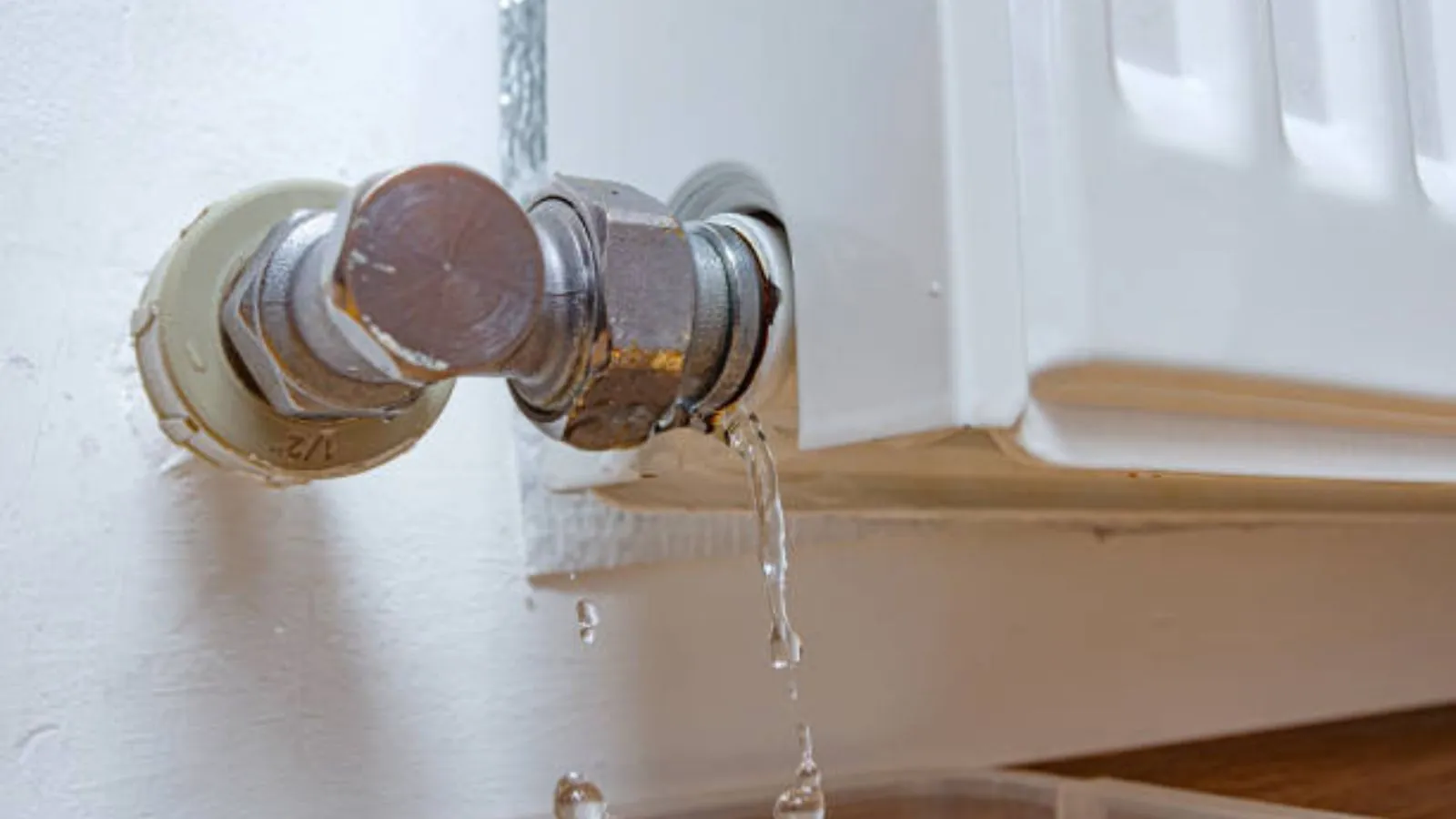
A leaking water heater: what to do before anything else
A water heater leak can empty a full tank onto the floor, and the water is often hot. Our emergency line is open 24/7. Before we arrive, turn off the electricity or gas to the heater, close the cold water inlet valve on top of the tank and stay clear of the puddle.
A slow drip from a valve or fitting is a smaller problem, but it still saturates the floor and wall around it. Place a pan under a minor drip and call, because the tank may be near the end of its life. A heater that leaks from the tank body itself has usually failed and needs replacing.
Why water heaters fail in Duxbury basements and utility rooms
Most Duxbury water heaters live in basements, garages or utility closets, which are the places where a leak spreads quietly. The tank sits on a concrete slab and the water runs toward the nearest floor drain or low corner. Our basement cleanup page explains what happens when that water keeps spreading.
Much of Duxbury is served by the town's municipal groundwater wells. Mineral sediment settles at the bottom of a tank over the years and heats unevenly, which wears the steel. A heater that is more than a decade old, that rumbles when it heats or that rusts near the base is a candidate for failure.
Warning signs before a tank fails
- Rust-colored water from the hot tap.
- Moisture or rust streaks around the base or on the floor nearby.
- A popping or rumbling sound when the burner or element runs.
- Water pooling around the tank after hot water use.
- Corrosion on the pipe fittings or the pressure relief valve.
Need water heater leak cleanup help now?
Call dispatch. We answer 24/7 and start with safe next steps.
How we clean up and dry a water heater flood
We begin by checking that the heater is off and the water supply is shut. Standing water is removed with pumps or wet vacuums, and we photograph and measure every wet surface. Cabinets, drywall baseboards and stored boxes are the first items to take on water.
Most heater floods are clean supply water, which makes drying more straightforward. We use air movers and dehumidifiers, remove wet drywall at the base of the wall and lift any flooring that has trapped water. Moisture readings guide how long the equipment stays.
Replacement of the heater is a licensed plumber's job. We coordinate timing so drying equipment is not in the way and so the new unit sits on a dry floor.
| What you see | Likely source | Response |
|---|---|---|
| Slow drip at a fitting | Loose or corroded connection | Plumber repairs, dry the area, check the wall behind. |
| Puddle growing under the tank | Failed tank or valve | Shut off water and power, extract, replace unit. |
| Wet drywall near the heater | Long-term seepage | Open the wall, dry, test for mold. |
Repair or replace: what a leak usually means for the heater
A leak from a fitting, valve or pipe connection is often fixable by a plumber. A leak from the tank itself is almost always the end of the heater, since the steel has corroded through. The age of the unit and its warranty status help decide.
Prevention steps that reduce the odds of a repeat
- Flush the tank once a year to remove sediment.
- Test the pressure relief valve according to the manufacturer instructions.
- Place a drain pan with a drain line under the heater.
- Install a water leak sensor that sounds an alarm near the tank.
- Know the age of the unit and plan replacement before it fails.
If the heater sits in a finished basement, a pan and a floor drain make the difference between a puddle and a flood. Many older basements have neither. A small sensor costs far less than a repaired floor.
Cost factors for water heater leak cleanup
Price depends on how much water escaped, whether it reached finished spaces and how much drywall or flooring must be replaced. A concrete-floor basement dries faster than a finished room with carpet. We explain scope and price before work starts.
Insurers often cover the cleanup when a heater fails suddenly, while the cost of the heater itself and damage from long-term seepage are often excluded. Check your policy and ask your insurer, and keep the old unit until your adjuster has seen it.
If your heater leak reached carpet, see our notes on carpet water damage. If the floor stayed damp for days, talk to us about mold remediation.
Safety steps while you wait
- Close the main water valve before anything else.
- Keep power off in any wet room unless the panel is dry and you can reach it safely.
- Stay out of rooms with a sagging ceiling.
- Photograph the damage before moving belongings.
Our drying approach refers to ANSI/IICRC S500, the published standard for professional water damage restoration.
Water Heater Leak Cleanup questions in Duxbury
Do you handle water heater leak emergencies at night or on weekends in Duxbury?
Yes. Heaters fail at all hours, and dispatch answers every day of the week. Tell the operator whether the tank is still leaking and what you have turned off.
Is the water from a leaking tank dangerous?
It can be hot, and it can reach electrical equipment. Keep away from the puddle, turn off power or gas to the heater and wait for help.
How much water can a tank release?
A standard tank holds dozens of gallons. A split near the bottom can release much of that quickly, and a supply line can keep adding water until the valve is closed.
Can you replace my water heater?
No. A licensed plumber handles replacement. We clean up, dry and repair the damage around it.
How do I know if damage is hidden behind the wall?
Moisture meters and thermal imaging find wet material that looks dry. We check wall bases and adjacent rooms on every heater call.