
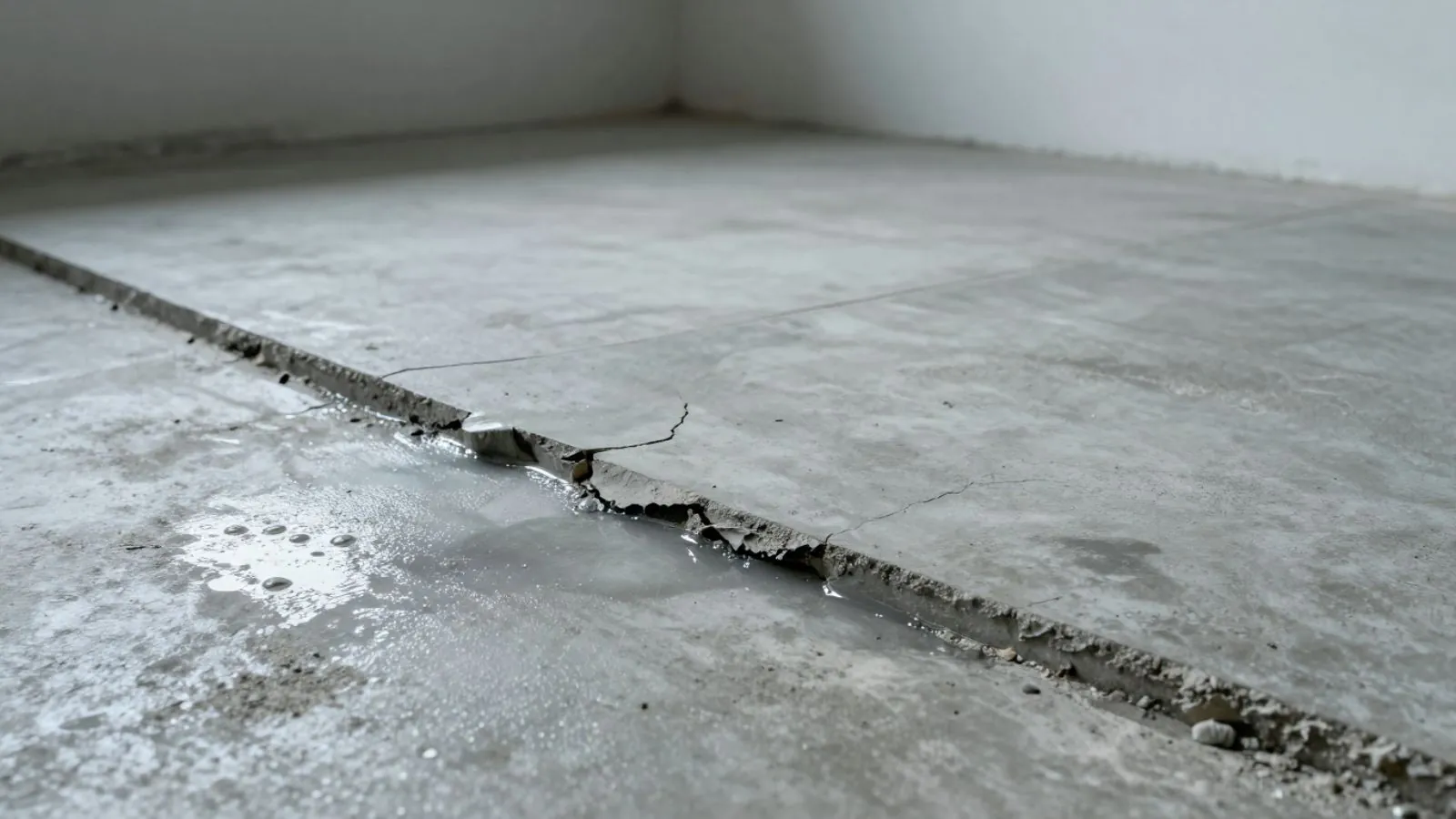
Symptoms that point to a slab leak under your floor
A slab leak is a break in a water line that runs beneath or through a concrete floor. You may never see the water at first. Our emergency line is open 24/7, so call as soon as you notice a warm patch on the floor, damp carpet with no source or the sound of running water when every fixture is off.
- A warm or hot area on the floor, which can point to a leaking hot line.
- A water bill that jumps with no change in how you use water.
- A water meter that moves when every fixture and appliance is off.
- The sound of running water from beneath the floor.
- Damp or discolored carpet, curling flooring or cracks in the slab.
- Musty odor in a room with no visible leak.
Slab leaks around Duxbury: where they show up
Many older Duxbury homes sit on basements or crawl spaces, but slab floors appear in additions, garages and newer construction. Lines that run under those slabs are out of sight and hard to inspect. A leak can go on for weeks before the floor shows a sign.
High groundwater near the bay can make a slab leak harder to read. Moisture rising from soil under a floor can look like a plumbing leak, and a real leak can be mistaken for groundwater seepage. A water meter test and a plumber's leak detection help tell the two apart. See our basement page for the groundwater side.
Confirming the leak and drying the affected rooms
The first step is a simple meter check. Turn off everything that uses water, read the meter, wait an hour with no use, and read it again. If the dial moved, water is escaping somewhere, and a plumber with leak detection equipment can locate it.
Our role is the water damage the leak caused. We map moisture in floors and walls with meters and thermal imaging, then dry carpet, pad, flooring and wall bases. When the slab line must be repaired or rerouted, the plumber and the drying schedule are coordinated so the work is done in the right order.
Slab leaks often run long enough to leave mineral deposits and mold risk behind. If the floor has been damp for some time, we test for hidden mold and explain options before rebuilding. Our structural drying page explains how the equipment is sized and monitored.
| Repair path | What it involves | Trade-off |
|---|---|---|
| Spot repair through the slab | Cut the concrete, repair the line, patch the slab | Direct fix, but floor finishes must be rebuilt. |
| Reroute the line | New pipe runs through walls or the attic | Avoids more slab work, opens walls instead. |
| Replace the line | Whole run replaced when pipe is failing in several places | Highest upfront cost, fewer repeat leaks. |
Need slab leak water damage help now?
Call dispatch. We answer 24/7 and start with safe next steps.
What a leak detection visit looks like
A plumber with listening equipment, thermal imaging or tracer gas can pinpoint a break under a slab without tearing up the floor. The visit usually starts with a pressure test on the lines. Marking the spot lets the repair be as small as possible.
Questions to ask before you approve a slab repair
- Where exactly is the leak, and how was it confirmed?
- Is a spot repair, a reroute or a full line replacement the better option here?
- How much of the floor finish will be removed and who rebuilds it?
- Is the leak on a hot or cold line, and does that change the plan?
- Will you document the failure in writing for my insurance company?
Those answers also help us plan the drying. If the plumber is going to cut the slab, we time equipment so it dries the surrounding floor and walls after the pipe is fixed.
What affects slab leak damage costs
The size of the job depends on how long the leak ran, how far the water spread through flooring and walls, and whether the slab has to be opened. Plumbing repair and water damage restoration are priced separately. We explain scope and price before work starts.
Insurance for slab leaks is more complicated than for a burst pipe. Many policies cover resulting water damage from a sudden break but exclude the cost of repairing the pipe or damage from a leak that went on for a long time. Check your policy and ask your insurer, and ask the plumber to document the failure.
If you are not sure whether it is a slab leak
Describe what you notice and we will tell you whether it sounds like a slab leak, a groundwater problem or something simpler. For wet floors with a clear plumbing source, start with our pages on burst pipes or appliance leaks.
Safety steps while you wait
- Close the main water valve before anything else.
- Keep power off in any wet room unless the panel is dry and you can reach it safely.
- Stay out of rooms with a sagging ceiling.
- Photograph the damage before moving belongings.
Our drying approach refers to ANSI/IICRC S500, the published standard for professional water damage restoration.
Slab Leak Water Damage questions in Duxbury
Do you handle slab leak water damage emergencies at night or on weekends in Duxbury?
Yes. If water is reaching your floor or walls, call at any hour. Dispatch will tell you how to protect the area while a crew is arranged.
How do I know if my floor is damp from a slab leak or from groundwater?
A meter check helps. If the meter moves with every fixture off, the cause is likely plumbing. If it does not move, the moisture is more likely coming up from the soil.
My floor feels warm. Is that a slab leak?
A warm patch on the floor can point to a leaking hot water line. Shut off the water heater and call a plumber as well as us.
Do you find the leak?
A plumber with leak detection equipment locates the break. We handle the water damage it caused and coordinate the drying with the plumbing repair.
Will a slab leak cause mold?
It can if the area stays damp. We check hidden moisture and tell you whether testing is worth doing before the floor is rebuilt.